READ ABOUT DETROIT AND SOLUTIONS TO ITS PROBLEMS. CLICK HERE.

Tuesday, November 14, 2006

Goverment Regulation

Over at Cafe Hayek, there is a posting and comments concerning the impact of airbag regulations on driver/passenger safety... really part of a larger discussion about the role of the government. The argued position was that the Federal government acted too hastily in establishing regulations for airbags and then discovered later that smaller women and children could be injured or killed by the force of the airbag deployment.

Sam's point that a national safety requirement like air bags is particularly harmful when it turns out to produce unintended consequences (killing women and children, initially, because of the power of the airbags). If one state or one manufacturer had made air bags too powerful, we'd have learned from it and fixed it. But more people die when it's nationally mandated.
Given the choice between deploying a technology that was very good, but not perfect and no use or significantly delayed use of that technology... I would argue that many more people were benefitted than harmed by requiring airbags than making them optional.

Why? Safety equipment is expensive and if a manufacturer tried to take on the marketplace alone by installing seatbelts and airbags and safety-related sensors in its vehicles while others did not, it would incur a significant market disadvantage... perhaps a few thousand dollars per vehicle... versus vehicles that did not have those features.

So what? Those who wanted those features could pay for them. True, but the likelihood that those systems would be installed in low-to-mid-priced vehicles would be much less than higher-priced vehicles. Why? Well, just look at the resistence to seatbelt laws. It took years to increase belt usage even when belt installation was required. What did it show? A large portion of the population a) doesn't understand risks, b) doesn't care about risks, c) isn't willing to pay for risk reduction... pick one. People had to be ticketed for not using seat belts before they were willing to do the logical or reasonable thing.

So, then, why should the govenment intrude on our individual choices with regulation? Simple: the marketplace is generally cost-driven. We have been educated to look for the lowest price, not necessarily understand the whole value proposition. And when it comes to safety or the environment, most individuals seem to use the reasoning that if I am responsible and others are not, then I'm not really accomplishing anything. Besides, "what could happen to me? I'm a good driver."

Sometimes the right thing to do is not necessarily the cheapest thing to do. And sometimes, the right thing to do needs a nudge from the government.

You don't believe that? Well, how many of you have or know of someone who has a circular saw without an electric brake? How many of you have or know of someone who has a table saw and who doesn't use the blade fence because it gets in their way?

A comment from a Cafe Hayek reader:
I would not dispute that seat belts make me safer, but I hate that I can be ticketed for not wearing one. I don't even mind paying for tha added safety, but whether or not I use it is MY business.
Sure.... "Stupidity has its own rewards."

Sometimes... it makes sense to have regulations... to require improvements even when the cost per person is high and the risk per person is low.

Monday, November 13, 2006

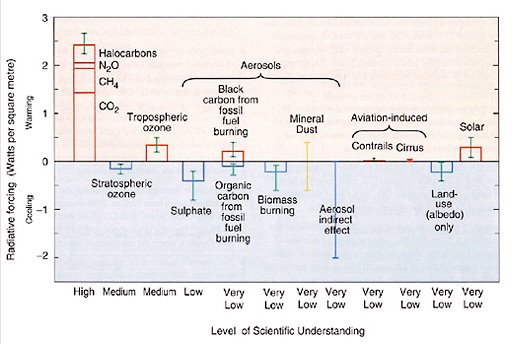
Global Warming Proved!

Okay, I got your attention. But NASA says I'm wrong.

I thought last year's hurricane season was the proof... Katrina and the others. But then, this year... nothing. Geez, we just can't rely on anything. And just when I was hoping we'd have a longer golfing season in Michigan.


By the way, you may want to examine the climate history of earth a little closer. The "average temperature" for earth is estimated at about 14° C. Compare that to the range over millions of years (12° to 22° C) and you'll see that the "doomsday" warnings of an increase of 2° to 5° C might be a little hyperbole. Perhaps we are just getting back to "normal?"

After all, if you want to compare it to the ice age, then I guess earth is getting hotter... but who wants to live in an ice age?

Hard Choices

Martin Kelly has some ramblings from Scotland that I read. He also has a "Political Profile" from Blogthings that I thought was neat so I tried it (see right).

I'm not too surprised by the result, although some of the questions left me straddling the fence a bit... I tend to not be an absolutist... but the evaluation required hard choices.

You might want to try it, too (use the link at the bottom of my results).

Sunday, November 12, 2006

Worth Viewing

From my son's professional blog.

Social Contracts

There is a common belief (although not necessarily an accurate one) that there is an implied "social contract" that goes something like:

"The problem is to find a form of association which will defend and protect with the whole common force the person and goods of each associate, and in which each, while uniting himself with all, may still obey himself alone, and remain as free as before." This is the fundamental problem of which the Social Contract provides the solution.

If then we discard from the social compact what is not of its essence, we shall find that it reduces itself to the following terms:

"Each of us puts his person and all his power in common under the supreme direction of the general will, and, in our corporate capacity, we receive each member as an indivisible part of the whole."

by Jean Jacques Rousseau; 1762

Translated by G. D. H. Cole, public domain

These simple arguments seem to crystallize the debate that continues throughout our political and philosophical arenas.
  • Is there really a "social contract" between an individual and all other individuals in a society... and if so, what are the terms and conditions... what must I do and what can I expect?
  • How are my rights as an individual protected?
  • What are my responsibilities as an individual toward society?
  • What happens to my rights if I fail in my responsibilities?
  • What are my rights if society fails in its responsibilities?
  • Can my rights be more important than someone else's'?
One only has to look at the volume of laws and judicial opinions to see that there is no "real" answer... only efforts to balance the rights of individuals versus the demands of social membership. One has only to look at the spectrum of political rhetoric to see that there are many "possible" answers.

Saturday, November 11, 2006

Michigan Voters Say No To Affirmative Action

What happens when the Law of Unintended Consequences is fulfilled?

Affirmative Action, the offspring of the 1964 Civil Rights Act, once meant efforts to help America's Black minority achieve a substantial economic footing after centuries of abuse and discrimination. Initial efforts were intended to address overt roadblocks and covert hindrances. Scholarships, jobs, loans, support programs, and the like were established to address economic problems. Black coalitions were encouraged and established to create a political presence that was effective and representative. Companies created affirmative action programs to mentor Black trainees whose background was deficient in business skills.

While there was resistance, there was acceptance. Something had to be done to redress wrongs and help a significant segment of our population to truly integrate with the rest of society.

Then some strange mutations began, most notably that women were covered by the efforts. While not a "minority" in a population sense, women were now considered an oppressed segment because they were "under-represented" in business, average income levels, education, sports, and on and on. So legal action (Title VII) addressed that. If men had it; women should have it, too. Simple enough.

But then the courts began to find a pervasive discrimination in everything everywhere. So, the only "logical" way to address that was to move beyond prohibiting discrimination to creating outright preferences for Blacks and women... a "temporary" fix until everything was the way it should be. Businesses went from discrimination to non-discriminatory hiring and mentoring to "diversity programs". Universities created different and lower admission standards to increase "diversity." Governments required "representation" in police and fire departments at the executive and supervisory levels.

And a strange thing happened: white males began to make noises about "reverse discrimination." It didn't matter if you were the best qualified; you weren't "diverse." There were statistics to fix.

But government and business and education had bought into "diversity" programs so this temporary adjustment period had to go on... even if it did hurt some white males who had all of the other advantages... even the poor, white males.

Then something stranger happened: a young woman was denied entrance to the University of Michigan law school even though her academic credentials were superior to a Black student who was selected. Wait a minute!!!! This wasn't fair! Women were under-represented in law school, too! Well, sorry miss, a choice had to be made between oppressed groups and your group lost. Race trumped all.

Let's cut to the chase. This woman became the poster child for what was perceived as the civil wrongs of Civil Rights. A law intended to eliminate racial discrimination had become the basis for blatant racial discrimination. The law of unintended consequences was fulfilled.

A "diverse" and unlikely group became the core of an effort to get a proposal on the Michigan ballot that would direct the State to amend its Constitution to:

  • Ban public institutions from using affirmative action programs that give preferential treatment to groups or individuals based on their race, gender, color, ethnicity, or national origin for public employment, education or contracting purposes. Public institutions affected by the proposal include state government, local governments, public colleges and universities, community colleges and school districts
  • Prohibit public institutions from discriminating against groups or individuals due to their gender, ethnicity, race, color or national origin. (A separate provision of the state constitution already prohibits discrimination on the basis of race, color or national origin.)
The response from business, media, government and educational leaders was immediate and harsh. This was WRONG!

But when November 7 came and went, the voters... 2 to 1... said "this is right."

Two years ago I wrote to the president of the University of Michigan about their admissions program. You can read what I wrote here.

There are ways... and there are ways.

Friday, November 10, 2006

Flags of Our Fathers

Tomorrow, we celebrate Veterans Day. I'd like to suggest that, if you have the opportunity, go see the film "Flags of Our Fathers."

You might be surprised that it is not your run-of-the-mill war action film... although there is enough of that. You will walk away with at least two non-traditional views about Americans and war:

  1. Americans are reluctant warriors
  2. Perception is reality; facts are not
If you want comedy, don't bother with this film. Otherwise, go see it. Certainly, it is a dramatization of events, but I suspect a good representation. It is one perception and one reality... I wouldn't assume it is all "fact." And stay for the credits.

Wednesday, November 08, 2006

Election Results

A lot is being written about the War in Iraq as the reason why so many Democrats have been elected to formerly Republican held seats.

I think that there may be a less discussed reason: economics. Here is Michigan, people re-elected a Democrat governor despite the state having the worst economic situation in the U.S. But it's not just Michigan. The northern-tier states... those with the unhappiest economic prospects... are those who are saying that a situation that favors low-priced imports over U.S. jobs is not what they want. Especially when the jobs are being transferred to China where currency manipulation, piracy and counterfeiting of U.S. products and processes, and unethical business practices are the primary reasons for U.S. job losses in manufacturing states.

Now many economists don't believe that thinking is rational or sound. They contend that if China wants to "give" us stuff for far less than it can be made here... why we should welcome their generousity... even if millions of manufacturing jobs get flushed down the toilet. That's just the price for global trade. The real question is: what will we have to trade for those Chinese products in the next ten or fifteen years? They already have research, engineering and manufacturing capabilities that U.S. businesses developed for them. Pretty soon they will have the marketing and sales capabilities. What does that leave us, consumers? And just how do we pay for being consumers?

Simply take out more loans on your home that is losing value daily. Call it a "personal trade deficit."

Tuesday, October 31, 2006

I Got Mine Versus We Got Ours

I posted this as part of discussion in today's Cafe Hayek:

I think you just struck the heart of the differences:

From your point of view there are NO NATIONAL INTERESTS, only economic decisions that favor you.

From my point of view, there is a national interest in ensuring a competitive system that is not RIGGED by one of the players to irrevocably harm the other players... especially when those actions, on a global scale, weaken the ability of U.S. industries (and suppliers, and associated service industries, and associated professionals, and associated communities) to remain economically viable.

I do not believe that "I got mine" is a viable economic strategy for the members of any group, population, nation, when the rest of the group, population, nation is in jeopardy.


Addendum quote:
So far, the only player guilty of "protectionism" is China which government has been actively working to expand many of its industries through subsidies and other favorable operating conditions.

And that really seems to be working for them. The strategy is relatively simple: create an artificial imbalance that will temporarily benefit some portion of a competitor's industries while gradually eliminating others. Once competition in one sector has been crippled, target another. That way, while the targeted industry is being crippled, the other industries remain silent because they are temporarily benefitted.

It's classic divide and conquer.

But don't worry... you got yours... for now.

Monday, October 30, 2006

The Eve of Destruction

Back in the 1960s, there was a popular anti-war song entitled Eve of Destruction by Barry McGuire.

Paul Craig Roberts writes:

The declines in some manufacturing sectors have more in common with a country undergoing saturation bombing during war than with a super-economy that is “the envy of the world.” Communications equipment lost 43% of its workforce. Semiconductors and electronic components lost 37% of its workforce. The workforce in computers and electronic products declined 30%. Electrical equipment and appliances lost 25% of its employees. The workforce in motor vehicles and parts declined 12%. Furniture and related products lost 17% of its jobs. Apparel manufacturers lost almost half of the work force. Employment in textile mills declined 43%. Paper and paper products lost one-fifth of its jobs. The work force in plastics and rubber products declined by 15%. Even manufacturers of beverages and tobacco products experienced a 7% shrinkage in jobs.

The knowledge jobs that were supposed to take the place of lost manufacturing jobs in the globalized “new economy” never appeared. The information sector lost 17% of its jobs, with the telecommunications work force declining by 25%. Even wholesale and retail trade lost jobs. Despite massive new accounting burdens imposed by Sarbanes-Oxley, accounting and bookkeeping employment shrank by 4%. Computer systems design and related lost 9% of its jobs. Today there are 209,000 fewer managerial and supervisory jobs than 5 years ago.

No sane economist can possibly maintain that a deplorable record of merely 1,054,000 net new private sector jobs over five years is an indication of a healthy economy. The total number of private sector jobs created over the five year period is 500,000 jobs less than one year’s legal and illegal immigration! (In a December 2005 Center for Immigration Studies report based on the Census Bureau’s March 2005 Current Population Survey, Steven Camarota writes that there were 7.9 million new immigrants between January 2000 and March 2005.)

The economics profession has failed America. It touts a meaningless number while joblessness soars. Lazy journalists at the New York Times simply rewrite the Bush administration’s press releases.

Mr. Roberts resume:

Paul Craig Roberts was Assistant Secretary of the Treasury in the Reagan administration. He was Associate Editor of the Wall Street Journal editorial page and Contributing Editor of National Review. He is coauthor of The Tyranny of Good Intentions. He can be reached at: paulcraigroberts@yahoo.com. This article originally appeared at counterpunch.org and is published in the Baltimore Chronicle with permission of the author.
Tip of the hat to Martin Kelly.

..

Sunday, October 29, 2006

Updated Blog

I spent a good part of today revising the look and content of this blog to, hopefully, make it a little more readable and organized using the new "Blogger beta" version.

One of the really nice features that had been missing previously are "labels" (categories) for each posting. You might want to explore them. One of my favorites is "Futurescape."

Saturday, October 28, 2006

How Economists Think

From Cafe Hayek:

Bruce, if all of us are better off by trading with China, where are the victims? Are you saying that at some time in the future, China is going to say "Okay, we now know how to make your products without you. Now go away and we will continue to sell into the US."? If they're going to steal IP, they don't really need anybody's help. Reverse-engineering is a fairly well-developed art. And if it's legal for China to sell something into the US, then it's legal for Iowa to sell it into New York. Are you going to suggest that New York needs to put up protectionist barriers against Iowa?

Posted by: Russell Nelson | Oct 28, 2006 1:59:24 AM

My response:

Russell,

I don't believe I ever made the case that we are all better off dealing with China... others have stated that as their belief.

My position is clear: China represents an economic threat to the U.S. because it is a wholly unethical trader.

If I steal something that you make and then sell it back to you for less than you can make it, does that make it a bargain for you? If you believe so, then we should do a lot of business. I can make you very pleased with those new economics.

The fact that China provides cheap labor in the short run does not offset the economic harm done to businesses that have their products and processes usurped by China. It does not make up for the costs of research and development that are lost as a result of counterfeiters not only destroying the market opportunities in China of those whose products or processes were taken, but also undermining those companies in the U.S. by becoming "competitors" as they sell their knock-offs in the U.S. You might actually read some of the examples I cited earlier rather than giving totally hypothetical examples of how we benefit by being undermined.

What you've basically said is that since the Chinese are going to steal from us, we might as well buy from them to make up for it. Wow, that is really obtuse! Just because a corrupt government in China looks the other way doesn't mean that we should. Or is all fair in economics and war?

I lose your analogy to Iowa and New York completely. Are the Iowa farmers ripping off the research and development and processes and products of the New York businessmen?

Posted by: Bruce Hall | Oct 28, 2006 10:46:14 AM

Friday, October 27, 2006

How China Competes

I have written about how China uses currency manipulation to create a "low-cost labor" image around the world. But there is a more insideous side of China's economic policy: theft.

For those who argue it is simply "free trade" and "good economics" to source in China, perhaps they might want to read the following:

China's national industrial policy facilitates forced technology transfer to Chinese industries. One new mechanism is the so-called CCC safety certification. Every electronic component or piece of equipment to be sold in China must be submitted to the Chinese government body overseeing the CCC certification. The process requires the foreign manufacturer to give Chinese officials full access to engineering drawings and schematics and to provide a complete finished product for evaluation. In addition, the applicant companies must pay for Chinese officials to visit and inspect their factories outside of China.
I'm not sure if those economists are ignoring this issue because it is inconvenient to fit it into their "free trade" philosophy or because they view it as unimportant. Either way, this is an example of how China steals jobs, business, and profits from the world... especially the U.S.

Wednesday, October 25, 2006

Diesel Power

There was an article about a new turbo-diesel powered car from Honda in The Detroit News today. That was hailed as a breakthrough because Honda has always focused on gasoline-powered cars.

There was also an article about a new, turbo-diesel Mercedes in that same paper. The engine was praised for its power, economy and cleanliness.

The reason I bring this up is two-fold: 1) I had brought up the issue of turbo-diesels as a lower-cost, better performing, more durable alternative to ethanol (E-85) in a discussion yesterday and 2) I have written about this a couple of times in this weblog:

It's not that big of a stretch to understand why. Turbo-diesels offer better mileage and performance than most alternatives and the technology and fuel are readily available. There is also a potential environmental advantage over hybrids: no expensive battery packs to dispose of after they fail.

Sure, diesel fuel is oil based. But diesel engines can cut consumption significantly and be produced in large numbers by all manufactureres. That Mercedes is rated at 26 mpg city/37 mpg highway. Not bad for a larger car considering the numbers for that same car with a gasoline engine is 19/26. That's better than a 1/3 improvement in fuel economy... or a lot of barrels of oil.

And the key word here is clean.

Tuesday, October 24, 2006

Striking a Nerve

Today was a bit chilly and windy, but I got together with some friends and played golf. Surprisingly, keeping a winter golf hat and gloves on kept me comfortable enough to play and I did reasonably well striking the ball. About an hour into the round, I got a call from home with a message that the BBC (yes, those people in London) wanted me to participate in a discussion panel at a Detroit radio station that would be linked up to their broadcast in England. Apparently, the BBC had gotten wind of my previous post which was also forwarded to the Detroit Free Press which publish an abbreviated version of it. Unfortunately, they only gave me a couple hours notice, so I had to pass on the opportunity.

The subject was the whole cultural conflict between the West and Muslim (read Arab) world as symbolized by the reaction to women wearing a veil during meetings and trials and other public events where a discussion or dialog was supposed to take place "face to face."

It seems trivial, on the surface, for a veil to cause so much concern. But apparently, the veil is striking a nerve in the West as a symbol of what seems to be irreconcilable differences between cultures. Unfortunately, what is perceived as Muslim culture is only the culture, religion and politics as practiced by some Muslims... but that point is a little too subtle for too many. Some is too many, it seems.

Sunday, October 22, 2006

Freedom of Religion or Anarchy?

Does Freedom of Religion trump everything else?

Not according to a local judge who dismissed a woman's claim against a car rental agency because she refused to remove her veil in court.

Now, I don't really know if that is fair or not. It was up to the judge's discretion. But last year, a student at the University of Detroit was allowed to openly wear his dagger on the grounds that it was an integral part of his religious belief.

I suspect that the anti-Muslim sentiment prevailing in the U.S. might have had something to do with the judge's decision. There is an uneasiness and distrust around someone who hides their face from the world. It is a cultural thing in the West: "you have something unsavory to hide."

And that is the crux of the issue: distrust. As Jack Straw said: "I felt uncomfortable about talking to someone 'face to face' who I could not see."

Let's face it, the veil has little to do with what people are saying or doing. It boils down to this: the West does not trust Islam; it does not consider Islam to be a legitimate religion because so many of its adherents use covert, violent actions against so many in the West. If a Buddhist woman chose to wear a veil in court, the judge would not have had one qualm about it. But a Muslim woman is part of a religion that tolerates or, in some areas, fosters intolerance and violence.

The judge's reaction was not a matter of law; it was simply a reaction to a symbol that is, increasingly, seen as anti-Western.

Friday, October 20, 2006

Good, no Bad, no Good!, no Bad!

Two interesting views of the economy:

Why can't we all just get along?
- Rodney King

Thursday, October 19, 2006

China - The Replacement for the U.S.?

Oh, I'm not talking about the next big democracy.

Take a look at this article from Inc. Magazine... the entrepreneurial magazine.

It is an excellent presentation of many the facets of the emerging China. Back some time ago, I pondered how someone making 45-cents per hour could live so well in China. This article answered that and confirmed my position: it's funny money.

But that's not really the importance of this article. Take the time to read it. Then go to Cafe Hayek and read all of the comments about how U.S. business is so inefficient that it has to outsource to China and that it is so good for us to do so.

Then, if you still feel like going to Wal-Mart to by some "China-priced" goods... have at it.

Wednesday, October 18, 2006

Opposition is Easy

Two blogs I enjoy reading are Cafe Hayek and Reich's Blog. The most recent posts were about opposing... health care for the poor in the former and all things Bush in the latter.

I like to oppose as well. It's fun to wield the needle. But, then you have to propose something in place of what you oppose.

In the case of the Cafe Hayek post about health care for the poor, it was to let things stay as they are... the poor must not need health care. I pointed out that we have public education that may not be necessary for middle and upper classes, but a private alternative for the lower-income strata is not an option. It is more expensive for ME, but then I benefit from not having masses of uneducated people clogging the streets. Likewise, I would benefit from having people would could not afford the high cost of health care (due in part to the lawyers who have sued the hell out of the medical profession and raised the costs for everyone else), have some form of care that does not require them to seek attention at expensive emergency rooms where the cost is then passed on to everyone else... and service reduced as well.

In the case of Reich's Blog, he made some reasonable points about the political conundrum facing the Democrats and some issues about hedge fund abuses.... Then he went on to make a blatantly false accusation that Cheney wants to start bombing Iran and North Korea's nuclear facilities. This has no basis in anything reported by anyone credible... other than some speculation by fringe Democrats.

"Cheney wants to bomb Iran's and North Korea's nuclear facilities. He's become even more hawkish than before, and Rice is no match for him. He's the president of American foreign policy. He figures he has only about 18 months left to do what needs to be done, to ensure his and Bush's legacy and make the world safe from the axis of evil. He also figures Iran and North Korea are becoming ever more dangerous, that no one else is willing to do anything about them, that the US has the fire power to do what needs to be done, and only whimps are putting up a fight inside the Administration. All he needs to do is convince Bush, who is coming around."
They say it isn't so when the Koreans were testing a long range missile and again when they were testing the nuclear bomb:
My response to Bob Reich was "what SPECIFIC ACTIONS do you recommend" since he needs to make up false positions about Bush/Cheney. After all, North Korea has been researching and developing a nuclear weapon for at least 2 decades and probably more.

We need a proposal here, not just an opposal.... Come on, Bob!

Tuesday, October 17, 2006

Rights or Wrongs

In today's Cafe Hayek, Dr. Boudreaux references an article he wrote for The Christian Science Monitor about health care. With regard to the notion that healthcare was a right, he wrote:

Sounds noble. But not everything that is highly desirable is a right. Most rights simply oblige us to respect one another's freedoms; they do not oblige us to pay for others to exercise these freedoms. Respecting rights such as freedom of speech and of worship does not impose huge demands upon taxpayers.

Healthcare, although highly desirable, differs fundamentally from these rights. Because providing healthcare takes scarce resources, offering it free at the point of delivery would raise its cost and reduce its availability.
He then went on to explain that the government is inept and would bungle the process and make it too costly.

Well, there is some truth to that perhaps, but one often weighs the cost of government provided services versus no services. If you are a successful professor of economics at a prestigious university, your perspective may be somewhat different from a poor, single mother or a poor, elderly person. My response was:

Interesting argument.

Now substitute "education" for "health care".

Now substitute "social security" for "health care".

It's beginning to sound very 18th century. "Let them eat cake."

Oh, by the way, Dr. Boudreaux's university is state supported!

Friday, October 13, 2006

Ethnic Divisiveness - Europe Running Out of Patience

Back in August 2005, I wrote that:

Muslims seem to have forgotten that the recent decades of Western European tolerance is really not part of their history... quite the contrary. First Spain, then Denmark, now Britain; these are strategic mistakes by the Islamic radicals.
A couple of days ago, The New York Times featured an article by their European correspondents that stated:
BRUSSELS, Oct. 10 — Europe appears to be crossing an invisible line regarding its Muslim minorities: more people in the political mainstream are arguing that Islam cannot be reconciled with European values....

For years those who raised their voices were mostly on the far right. Now those normally seen as moderates — ordinary people as well as politicians — are asking whether once unquestioned values of tolerance and multiculturalism should have limits.

Former Foreign Secretary Jack Straw of Britain, a prominent Labor politician, seemed to sum up the moment when he wrote last week that he felt uncomfortable addressing women whose faces were covered with a veil. The veil, he wrote, is a “visible statement of separation and difference.”

So strong is the fear that Dutch values of tolerance are under siege that the government last winter introduced a primer on those values for prospective newcomers to Dutch life: a DVD briefly showing topless women and two men kissing. The film does not explicitly mention Muslims, but its target audience is as clear as its message: embrace our culture or leave.

Perhaps most wrenching has been the issue of free speech and expression, and the growing fear that any criticism of Islam could provoke violence.

In France last month, a high school teacher went into hiding after receiving death threats for writing an article calling the Prophet Muhammad “a merciless warlord, a looter, a mass murderer of Jews and a polygamist.” In Germany a Mozart opera with a scene of Muhammad’s severed head was canceled because of security fears.

With each incident, mainstream leaders are speaking more plainly. “Self-censorship does not help us against people who want to practice violence in the name of Islam,” Chancellor Angela Merkel of Germany said in criticizing the opera’s cancellation. “It makes no sense to retreat.”
Yes, Europe is beginning the process of isolating and removing the Muslim culture from its boundaries. It is not going to be pleasant, but it is wholly expected.

Thursday, October 12, 2006

Excessive Spending - Keep Minimum Wages Down

Yes, keep minimum wages down. That's what is advocated in Cafe Hayek, a site moderated by two George Mason University professors.

As a direct response to that, I wrote the following comment on their site:

"Let them eat cake."

I believe that was spoken by a French economist who didn't understand the connection between economic theory and political reality.

Hmmm.

Then, Cafe Hayek had another post that expanded on the notion that raising minimum wages nationally makes companies uncompetitive and forces layoffs.

My response was:

If keeping wages low were the key to competing, then Costco would not be able to compete with Wal-Mart/Sam's Club. The fact that Costco not only competes, but pays significantly higher wages AND has higher customer satisfaction shows how spurious the argument against raising minimum wages is.

The number of employees affected would be a small fraction of total employment, but the positive impact to those employees would be significant.

Coffee shop tales notwithstanding, the fact is that minimum wage rates have never been the measure of any company's ability to compete.

They also quoted the "Coyote Blog" where the following was stated:

"In a number of locations, we have been forced by rising minimum wages and associated costs (particulalry workers comp.) to switch some of our cleaning and landscaping duties from our live on-site employees to local contractors. These contractors may pay their workers more than minimum wage, but the workers are often twice as productive as ours, yielding a cost savings for us. When minimum wages are $5.15 an hour, these contractors can't compete with our own workers, but when minimum wages rise over $7.00, as they are across the west coast, this option starts to become attractive."

My response to that post was:

Hmmm. As a small business owner, I would have to say that you are just making excuses for your own business inefficiency. After all, these contractors will have to pay the same minimum wages, so why can they do it and succeed when you do it and fail?

The argument about "affordability" is a red herring.

In an email to Prof. Russell of GMU, I wrote:
Perhaps, instead of railing against a few extra dollars an hour, you and your fellow economists can devise a workable roadmap from subsistence to success that can be taken to the single parents in the poor sections of Detroit and similar cities... one where money really doesn't matter. Of course, one could always say economics deals with the larger picture and creating workable "roadmaps" is not part of that process. Too many variables, etc. Yes, one could say that... and that increasing the minimum wage is a bad thing for the recipients... and it is okay to create a Catch-22, where you need a better education to get out of poverty, but it costs too much to get that education if you are earning "minimum wages"... and it's good for the poor to have competition between U.S. workers and Chinese workers for the entry-level jobs that are the path out of the minimum-wage trap.

One could say those things... and nothing is solved... but the macro numbers look good. At some point, there is a need for both business and government to recognized that leaving a permanent underclass to its own devices may be more expensive in the long run than creating and managing processes to address the situation. Lowering corporate taxes and outsourcing entry-level jobs has helped corporations, but not necessarily translated into opportunity for those on the lowest economic rung in the U.S. So, if increasing the minimum wage is too costly as a first step, what is the first step?
The U.S. has a healthy overall economy (despite pockets of recession like Michigan). Capitalism is the engine of the economy. But if capitalism has no room for compassion, then perhaps we must question its tenets. A system that care only for the winners does not necessarily reflect the founding principles of this country.

The pilgrims did not operate their settlements on the basis of "I got mine."


Thursday, October 05, 2006

Not Like Detroit

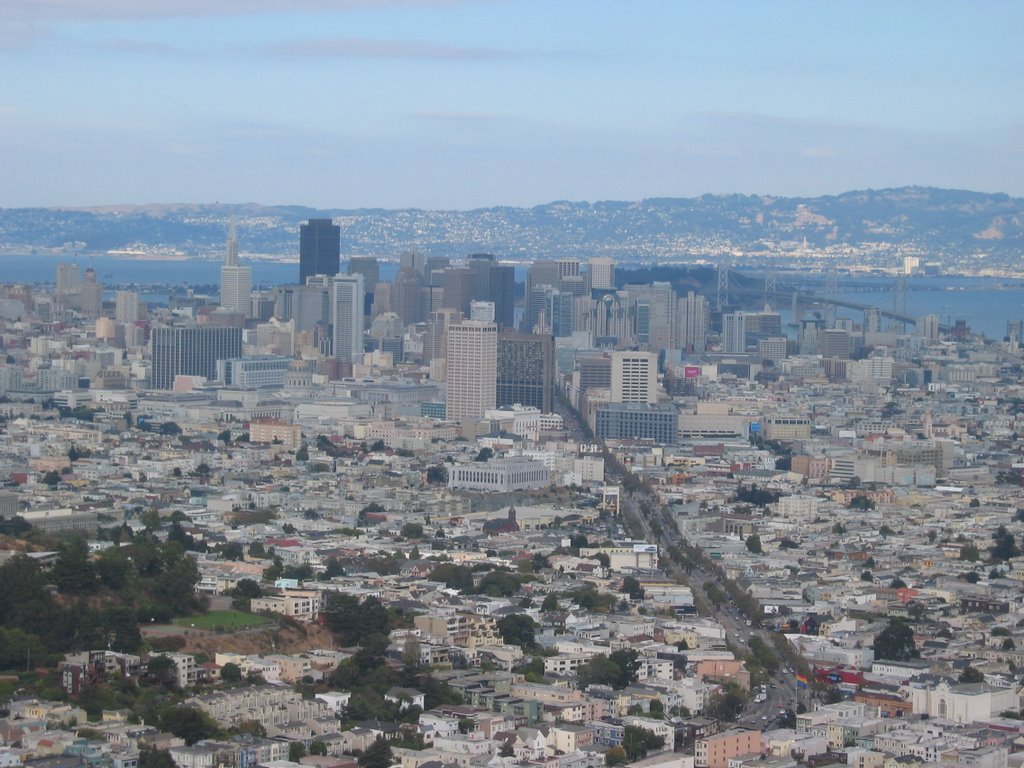
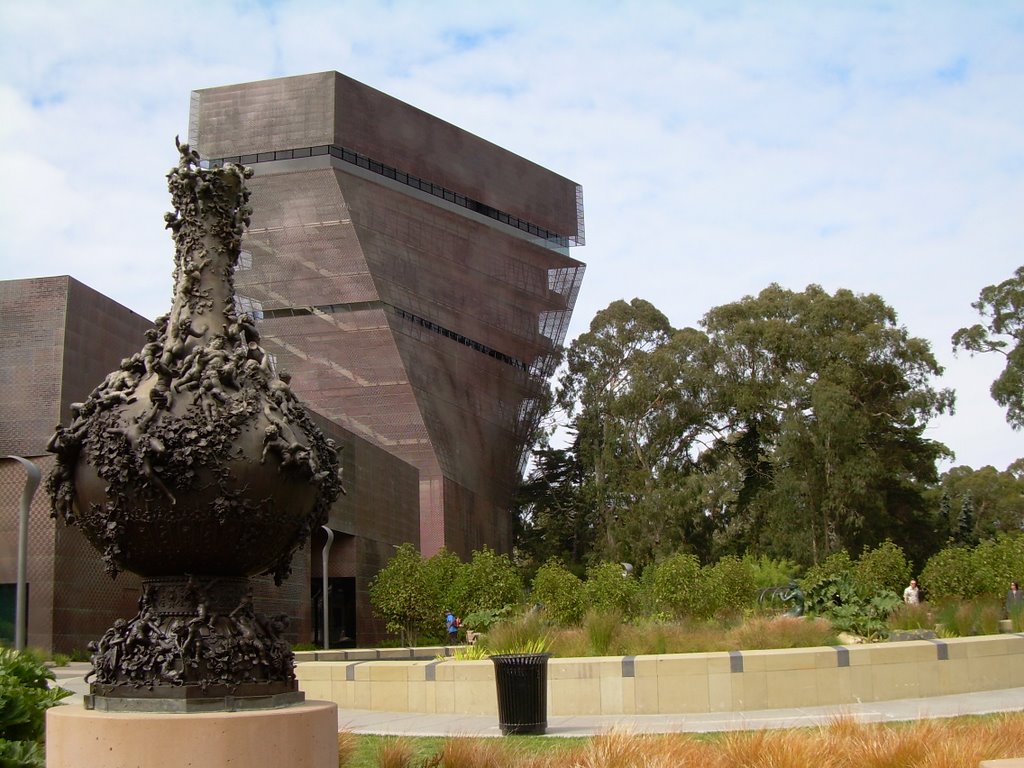
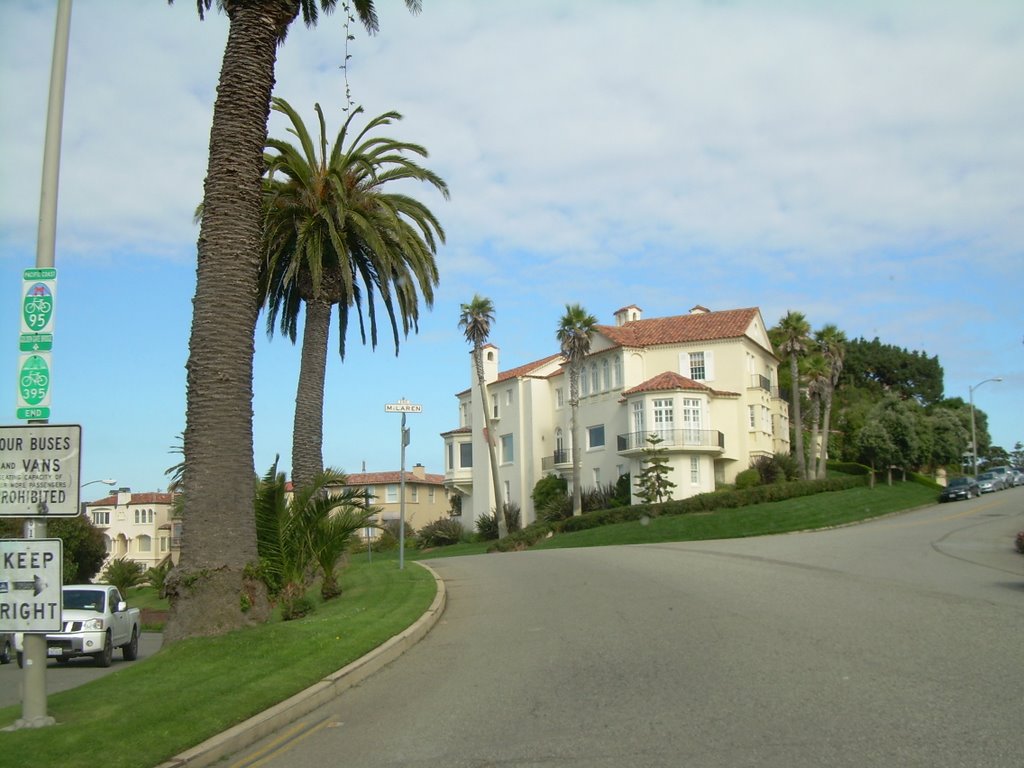
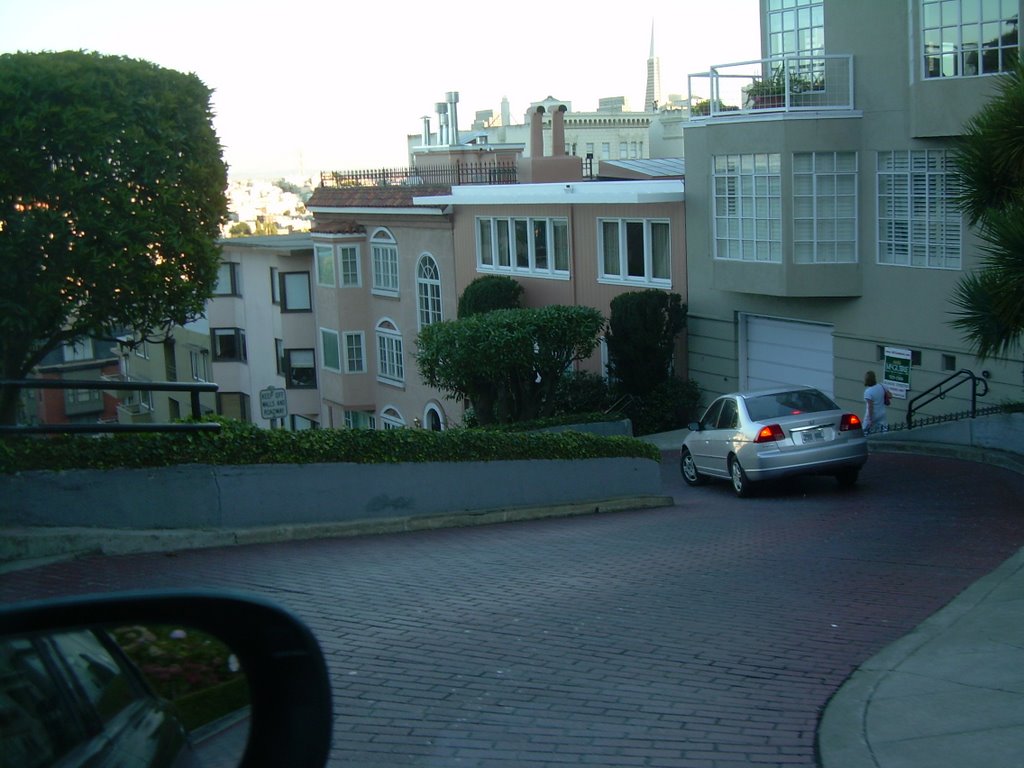
After a short visit and some 300+ photos later, I've returned from San Francisco with another perspective about Detroit and southeastern Michigan. Some history first:

  • Detroit area was settled in the early 1600s; San Francisco started with a Franciscan mission around 1776.
  • Detroit reached a peak population of 1.8 million in 1950 and has declined to about 880,000 or less; San Francisco has had a relatively stable population of about 750,000 restricted by space and cost of housing.
  • Detroit's population is about 87% black and 13% white; San Francisco is about 50% white, 30% Asian, 8% black, and the remainder miscellaneous.
  • In 2003, Detroit had 29,000 violent crimes; San Francisco had less than 6,000.
  • In 2002, Detroit had a median income of $30,000; San Francisco had a median income of almost $60,000.
Detroit, unfortunately, represents the worst of what comprises a large, American city; San Francisco represents the best. San Francisco has some natural advantages over Detroit, but not as many as you might think to make the difference between the two cities.

You can click on the photos to see a larger image. Then use your "back" button to come back to this blog.


Thursday, September 28, 2006

Persistence Pays... Maybe

I received a call from the county Road Commission today. I have been a thorn in their side for quite awhile, but I have to say that Oakland County has been reasonably responsive. A lot of my issues are actually with the Michigan Department Of Transportation, but the county gets to process the complaints.

I did learn that some of the great things that were supposed to have been done over the past few years in the area of traffic management actually did not get done. All of those computerized signals that were supposed to optimize traffic... well, a lot of them aren't there. And, therefore, the high-traffic routes are disrupted by mechanical timers that lose their timing and create traffic "bunching"... clusters of vehicles that go from one red light to the next.

The Road Commission representative said that she would see to it that the specific problems I identified would be checked out by an engineer and corrected. That's great, but as long as the system is not upgraded, it will be a losing battle for commuters. Still, I applaud the Road Commission of Oakland County for trying to be responsive and responsible. Now, about MDOT....

Sunday, September 24, 2006

Catholics Threaten Cartoonist


Angry Catholics around the world threatened cartoonist Mike Thompson of the Detroit Free Press with death and beheading for publishing the cartoon depicting "fallible" popes. Catholics chanted "death to Mike," "death to the infidel" as they burned copies of the newspaper and declared a "Holy Crusade" against the "unbeliever"...

or not.

Monday, September 18, 2006

Muslim Reaction: Same Song 2nd Verse

... a little louder, a little worse....

Back in February I wrote about Muslim reaction to cartoons about Mohammed.

It appears that nothing has changed:

  • An elderly nun was killed in Somalia
  • Two churches were set afire on the West Bank
  • Protests occurred in Iran
  • Al Crummy declared the that the Pope and the West are "doomed"
Meanwhile, Christians, Buddhists, Hindus, Jews and others went about their daily lives.

As I said Friday, you can protest all you want, but if it is written and said and done... it's what it is.

Friday, September 15, 2006

Pots and Kettles

My unprovable beliefs are better than your unprovable beliefs.

By SUZAN FRASER, Associated Press Writer

ANKARA, Turkey - Muslims around the world expressed outrage Friday over Pope Benedict XVI's comments on Islam, with Turkey's ruling party accusing him of trying to revive the spirit of the Crusades and scores taking to the streets in protest

Pakistan's parliament unanimously condemned the pope, and the Foreign Ministry summoned the Vatican's ambassador to express regret over the remarks.

The Vatican said the pope did not intend the remarks — made in Germany on Tuesday during an address at a university — to be offensive.

Benedict quoted from a book recounting a conversation between 14th century Byzantine Christian Emperor Manuel Paleologos II and a Persian scholar on the truths of Christianity and Islam.

"The emperor comes to speak about the issue of jihad, holy war," the pope said. "He said, I quote, 'Show me just what Muhammad brought that was new, and there you will find things only evil and inhuman, such as his command to spread by the sword the faith he preached.'"
People really get angry when you express something negative about their most closely held beliefs... probably because they know that they can only believe what they believe, not prove what they believe... especially when there is a provable assessment about what they believe... this is what is written; this is what is said; this is what is done.

Of course, using a 14th century reference from someone who supported 14th century Christian beliefs and actions is a lot like the pot calling the kettle black.

Thursday, September 14, 2006

Ahh! September!!!

Golfing in the 60s (temperatures not scores) with cider and doughnuts afterward. The only thing that could be better is scoring in the 60s, too.

Okay, not everything in Michigan is getting bad.

Tuesday, September 12, 2006

Path to 9/11

Kudos to ABC for its two-day broadcast of "The Path To 9/11". If you didn't see it, you can.
ABC did a risky and classy thing with this broadcast.

It was very difficult to watch it, but it's something that Americans should. While the portrayals may have offended some, the people portrayed did not have the benefit of 20-20 hindsight. It was amazing that some government officials actually tried to do the right thing and, at times, succeeded. The message was pretty clear to anyone watching: us or them.

It was also pretty clear that the Geneva convention doesn't apply... even if politicans and judges want to say it does. But that's another matter.

Monday, September 11, 2006

Uncivilized and Barbaric

September 11, 2001: the actions of those who caused the destructive events were uncivilized and barbaric. That does not mean they were unintelligent; it just means they are representative of a way of thinking that is the opposite of:

Dictionary.com Unabridged (v 1.0.1) - civ‧i‧lized  [siv-uh-lahyzd] Pronunciation Key - Show IPA Pronunciation
–adjective
1.having an advanced or humane culture, society, etc.
2.polite; well-bred; refined.
3.of or pertaining to civilized people


It also means, however, that they are ignorant of the Western culture to the extent that they believe that the Western world will convert to Islam under threat of death... anymore than it would convert to Nazism under threat of death.

Right now, these so-called Jihadists are nothing more than a major annoyance to the West. They cause some damage and hurt some people, but do not represent a substantial threat. But, in the future, if they actually pose a significant threat to the West, there will be an unprecedented price they pay for that... and Geneva convention violations will be the least of their worries.

Civilization is a thin veneer when ones world is threatened. The Jihadists, whether wildly disturbed individuals or rogue nations will learn that even nuclear weapons in their hands ensures nothing except a larger target on their backs. They will learn that even though they may be intelligent, cunning, brutal and fanatic... they will be tremendously stupid to do more than they have already done.

I believe that if there is another military action against a rouge nation or geography dominated by these people, it will not involve many land-based troops or nation rebuilding. The patience of the U.S. is running very short... and the willingness to be "civilized" toward these people is evaporating.

Tuesday, September 05, 2006

Inflationary Education - Part 2

A recent comment regarding my assertion that the cost of college education, which affects tens of millions of Americans, as a large contributing factor to overall inflation was criticized as unfair with the blame being placed on Medicaid.

While it is true that there have been some cutbacks in state support recently, the fact remains that SINCE 1958 the rate of tuition increase has been from 1.5-2.0 times general inflation.

It really boils down to two things:

  1. colleges and universities can have large increases in tuition year after year because our society places a premium on a college education, and
  2. colleges and universities choose to have large increases in tuition year after year to fund non-teaching efforts (and fairly hefty salaries for college presidents).
Nevertheless, colleges and universities are quick to point out the fiscal management shortcomings of business and government.

Monday, September 04, 2006

Not Feeling Your Pain

Visitors to the Cafe Hayek might be surprised to see how little empathy? there is toward the situation so many wage earners find themselves in today: declining real income. Rather, there are strong arguments made that because technology has improved the products we buy, even if the median income is declining (which they argue is not the case), our standard of living is increasing rapidly.

I think the only qualification is whether declining real incomes (if that is the case) allows the same number of people to buy the kind of products they would have purchased had their incomes kept pace with the costs of living. After all, if you can't afford to buy better products, you can't really enjoy them... or is that too self-evident?

Saturday, September 02, 2006

South of the Border

With all of the focus on the Middle East, most Americans... and the government, too?... seem to be ignoring what is happening in Mexico.

There is a growing movement away from the idea of a free-market, centrist government toward the socialist approach of Andres Manuel Lopez Obrador. The prospect of another Venezuela on our border is not exactly gratifying and could cause some additional political pressure to restrict the border even more than the planned wall and patrols.

Not much has happened to change the Hispanic tradition of bungled government in Mexico, Central America and South America. It looks like stupidity continues to have its own rewards there.

Friday, September 01, 2006

Thursday, August 31, 2006

Fighting Global Warming

From Reuters: California takes lead in U.S. global warming fight

California's Global Warming Solutions Act aims to cut emissions to 1990 levels, or around 25 percent, by 2020 with an enforceable cap and mandatory reporting for top polluters like energy companies.
Presumably, California will have a crash program to build nuclear power plants as well as thousands of wind turbines along the entire Pacific coast (just kidding... they'll be on top of the redwoods).

Actually, it's a admirably plan regardless of whether it has any affect on climate at all. If it leads to faster implementation of better, more efficient, energy technology, then it is a worthwhile effort ... even if it costs the citizens of California a lot of money to implement.

The article went on to quote oil-monger spokesman grousing about the effort:
"It is unfortunate such important legislation is being put together at the last minute without proper review and scrutiny, especially because of its potential to harm the economy," said Tupper Hull, a spokesman for the Western States Petroleum Association.
Hey, who could ever find credibility in anything coming from someone named "Tupper?"

Tuesday, August 29, 2006

ZoomZoom

Traffic has finally started moving along.

From CNNMoney:

2:24pm: Fed officials say they wanted to gather more data on inflation before deciding on future rate rises, according to the minutes of their August meeting. (more)
2:33pm: Central bank can't let inflation build up steam, Dallas Fed President says. (more)
1:03pm: August reading lowest since November on worries about economy, jobs. (more)
The Federal Reserve always acts on old information... and is the only cause of U.S. recessions.

Milton Friedman, no doubt is correct. The Fed is probably not necessary to keep the money supply under control... and unsaid... not cause recessions. See yesterday's post.

Monday, August 28, 2006

Friedman Economics 101

An interesting podcast at Cafe Hayek which takes about 1/2 hour... but worthwhile. Dr. Friedman argues, fairly convincingly, that the Federal Reserve system is pretty much unnecessary... and Dr. Roberts expresses the common frustration that it is, at times, incomprehensible... even to an economist.

Thursday, August 24, 2006

Asked and Answered

August 19, 2006 at 16:09:13

34 talking points for Dems. In case they decide they want to govern again.


by Jay Esbe

http://www.opednews.com

1. Is the United States safer without it's allies? with/without ... except for the British... not much difference.

2. Is the United States safer with it's military decimated and trapped in Iraq losing a batallion a month? decimate... "destroy 1/10th"... 1/10 of 2,000,000 troops = 200,000... 1/10 of 200,000 = 20,000... 1/10 of 20,000 = 2,000. So, 1/10 of 1/10 of 1/10 is "decimated"... or hyperbole.

3. Is the United States safer with the entire Arab world enraged on account of an illegal war? No... the entire Arab world is not "enraged" or engaged... only those who really, really want to use religion as an excuse to justify their power grab.... But are we talking about Iraq or the Arab attacks against Israel for 60 years despite the UN sanctioned borders?

4. Did Bush get Bin Laden? Wouldn't have had to try if Clinton had taken him in the 90s.

5. Is the United States safer with the Taliban back in Afghanistan and not enough troops because of Iraq? Perhaps safer with them in the caves than running the country.

6. Was America prepared on September 10th 2001 with Bush explicitly warned and supposedly in charge? What happened to the preparation that the Democrats should have started after the first attack on the World Trade Center and Hezbollah attacks on our troops?

7. Was New Orleans safer with Bush in charge? I thought the mayor of the "chocolate city" was a Democrat?... likewise the Governor of Louisiana.

8. Do you like being told that if you don't support Republicans, you're "on the side of the terrorists"? Not "on the side of the Terrorists"... just on the sidelines for doing anything.

9. Did Bush "solve the middle east problem" or is it now erupting in flames? Did anyone "solve" it. Hey, Bill, what was your solution again?

10. Do you feel safer when Republicans cut port security bugets? Is security spending in total up or down? How much was spent in total by Bill versus George.

11. Did it tell you something when Bush tried to turn New York/New Jersey port security over to an Arab co mpany? That maybe the Democrats who got so upset see all Arabs as Iranians?

12. Does it tell you something that the same Arab company is still in charge of New York/New Jersey port security 6 months after the arrangement was supposedly banned by congress? That the process of turning over the port to another company actually needs another company?

13. Do you wonder why Bush opposed the creation of the 9-11 commission? Hey, that's a good one! Do you suppose he was trying to protect the Democrats who did nothing for the 8 years prior to his taking over just a year prior?

14. Do you wonder why he immediately hired a personal attorney after 9-11? Because he was the one who flew the planes into the towers? Maybe because he understood that rather than address the situation, the Democrats would rather blame someone.

15. Do you wonder why Bush and Cheney REFUSED to be sworn in to swear to tell the truth when questioned by Congress about 9-11? You mean separation of powers? Ooops.

16. Did you liked being lied to 237 times to "justify" attacking Iraq? No, Bush should not have used information that was prepared during the Clinton administration. Shame on him for trusting the Democrats.

17. Do you think a man who was willing to lie 237 times to attack a country which never attacked us, and to kill a hundred thousand innocent people in Iraq, might have been willing to kill three thousand people in New York city to "justify" doing what he wanted to do? Ouch! Stretching that far must really, really hurt.

18. Do you think letting a thousand illegal aliens a day cross our border while confiscating your shampoo at the airport is a legitimate national security policy? Where was that wall and National Guard during the Clinton administration... and which party has long sought immigrants to boost their voting base?

19. Do you think declaring there are "no symbols of national significance" in New York in order to justify cutting proposed anti-terrorism funding is a legitimate national security policy? It's still a lot higher than it was when Clinton was in charge.

20. Do you like the 20,000 Iraq casualties for NOTHING; no WMD, no democracy, no peace, only increasing chaos and death? I voted for it before I voted against it... Saddam was already doing a more efficient job of killing Iraqis, Kurds and Kuwaitis....

21. Do you like starting unnecessary wars and then LOSING them? "I voted for it before I was against it...." Jack Kennedy... oh, wrong war... but the only war we "lost."

22. Do you approve of remaining in a lost cause and watching our soldiers die only to protect Republican politicians from admitting the obvious defeat which has taken place? No, and we should take those 32,000 soldiers out of Korea and 60,000 soldiers out of Germany. Over a half-century is just too long. They've won the economic war. Let's just surrender.

23. Republicans have controlled all 3 branches of government for 6 years, who then is responsible for all this? Voters.

24. Do you think keeping the people who've lied and repeatedly failed national security on the job, to fix what they broke, is smart? No, that's why the Democrats were voted out.

25. Do you like living in the most hated nation on earth now? I don't live in Iran.

26. Do you like having a religious delusional who claimed ""God"" told him to strike at Saddam", with his finger on the nuclear button? No, the Ayatollah should have been assassinated and I'm glad that Israel destroyed the Iranian nuclear program... but I'm sure the Democrats don't have the same feelings now about the current Iranian president and nuclear program.

27. Would you like the United States to attack Iran on false WMD pretenses too? "Fool me once....": Bush couldn't even finish the sentance correctly, can you? No, I think it makes more sense for them to develop their nuclear arsenal and start "Armageddon" in accordance with Islamic tradition.

28. Do you want a man who believes Armageddon is "necessary" to fulfill his religious beliefs? Well, you can't have it both ways now. Do you want us to get rid of the President of Iran or not?

29. Do you want two more years of this nightmare? I agree, Ben Bernanke should be replaced.

30. Would you like Bush and Cheney re-questioned about 9-11 and compelled to answer under oath? Yes, and Clinton and Kerry and ....

31. Had enough fear? No, that's why I continue to play golf.

32. Had enough abuse of power, contempt of congress, violations of the Constitution, violations of the court, arrests, indefinite detainment, and torture without trial? He did not have sex with that woman... so everything else is okay.

33. Had enough of being ashamed of your own country, all on account of a few contemptible criminals? That's a little harsh talking about Hillary that way... she didn't have sex with that man.

34. Tired of being held hostage to elevated terror alerts before elections and having your patriotism questioned when you notice they're compulsive liars? Gosh, I didn't know the Brits where having an election two weeks ago.

If you have had enough, realize that the ONLY way to change this disastrous course, is to elect Democratic representatives who will act to remove Bush from office. A vote for ANY Republican anywhere, is a vote for more of the disasters you've already seen and worse to come. Wow, an asteroid is next?

Okay, I've been chastize for calling Iranians Arabs... which I know they are not because we had Iranian neighbors for 20 years and they fully educated us on the difference... but I didn't think anyone would actually know the difference... Dick!
Monday, August 21, 2006

XX Moderate

I really liked this interview from the Colbert Report (click your "back" button to return to this page):

David Gergen, pt. 1 -- Stephen asks David Gergen how someone can be a passionate moderate.
David Gergen, pt. 2 -- Stephen and David Gergen discuss truthiness.
David Gergen, pt. 3 -- Stephen and David Gergen chat about how political parties have changed.

Strange that the discussions were broadcast in color since most talk about politics is black and white... damn liberal, wimpo Democrats... cowboy, war-mongering Republicans....

Sunday, August 20, 2006

Occupation Forces

50 years... 60 years and still the Forces of the Occupation remain. The few years Americans have had a military presence in Baghdad pales by comparison.

Yet where are the outcries? Billions... trillions of dollars spent on military Occupations after trillions of dollars spent on warfare. Yet no leader has been challenged or criticized for the enormous drain on the economy or the immoral action of decades of Occupation. Iraq is a mere puddle in the oceanic history of Occupation. But memories are short.

When, when I say, will Germany and South Korea have economies and democratic political systems strong enough for U.S. troops to end their Occupation? How long after defeating an enemy must the U.S. stay to ensure democracy and world safety? It is 2006 and here are the Occupation Forces still deployed:

Germany 69,395
South Korea (United States Forces Korea) 32,744
Japan (United States Forces Japan) 35,307
Italy 12,258

That's nearly half of the Occupation Forces deployed to the present war zone of Iraq. That's about 10% of the deployed forces from World War II and 50% of the deployed forces from the Korean War.

With the exception of Italy, the countries listed above are beating our butts in many economic arenas. So why are we there?

It seems that American presidents... Democrats and Republicans... just like the idea of having the American military deployed around the world. The real question is: who is the enemy and why are they our enemy? In a world where the U.S. is roundly criticized for taking military action and having Occupation Forces, perhaps the time has come to take a different tactic.

Perhaps the U.S. should withdraw from all military locations around the world and let other nations fend for themselves. Bring the military home and be ready for any threat to the U.S. When, not if, we are attacked, go after the attackers with ruthlessness. But forget occupying attackers' countries. We spend too much being "good guys". Attack, destroy, withdraw. Leave the attackers in a state of chaos... and take out their supporters for good measure. No more stick and carrot. Just stick. Then forget about them for the next 50 years while they try to rebuild.

Let Germany and Italy deal with the oozing Muslim invasion of their countries. Let Japan deal with China. Let South Korea spend its profits from Samsung and Hyundai on guarding its own borders.

Sure, it's a high-risk strategy, but it is better than having Occupations Forces someplace for a few years... and trying to be "good guys" spreading "democracy" to the singular-minded. Take all of the money we spend protecting the world and replace it with an effort to create a Fortress America where we are self-sufficient and can tell the rest of the world to solve their own problems... and leave us alone... or else... and stay away... we don't like you anymore....

Hey, "Fortress America"... that's catchy. Wonder why no one else thought of that?

American exceptionalism oscillates between isolationism and evangelicalism. Virtue must be protected in America from a corrupt world—or imposed by America on a corrupt world. At times (such as the two decades between the First and Second World Wars), American exceptionalists have wanted to create a Fortress America and leave the rest of the world to succumb to decadence, anarchy, and tyranny. In other circumstances, American exceptionalists have been energized by a millennial fervor for reforming the world. The two impulses have sometimes coexisted. In the 1890s, for example, one fervent Protestant evangelical politician, William Jennings Bryan, denounced American imperialism, and an equally fervent Protestant evangelical preacher, Josiah Strong, argued that it was America’s destiny to Christianize the world by means of an expansive foreign policy.

The isolationist wing and the evangelical wing of American exceptionalism share a dread of alliances: It might be necessary to make immoral concessions to allies to enlarge or maintain a coalition, and the purity of America’s purpose in foreign policy would then be diluted. Even worse, alliances might infect the godly American republic with Old World viruses—autocracy, perhaps, or collectivism. This fear explains why the United States participated in World War I as an associated power, not an ally. It explains, too, why the United States for many years refused to grant diplomatic recognition to the Soviet Union and the People’s Republic of China; merely to engage in ordinary diplomatic relations with an evil regime is to condone its crimes. American exceptionalism is responsible as well for the frequent use of economic and military sanctions to punish all kinds of transgressions by foreign countries. And its influence can be sense both in the American Left’s enthusiasm for private disinvestment campaigns against countries with objectionable governments and in much of the American Right’s reflexive unilateralism and suspicion of international organizations and treaties.


Okay, so maybe a few people have thought about it....

Friday, August 18, 2006

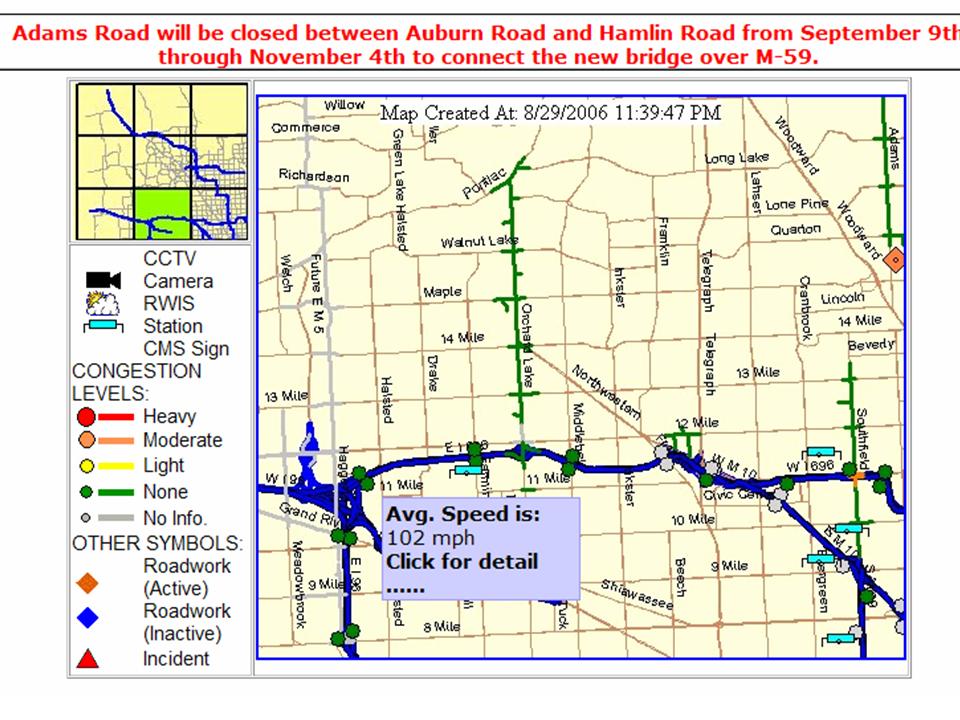
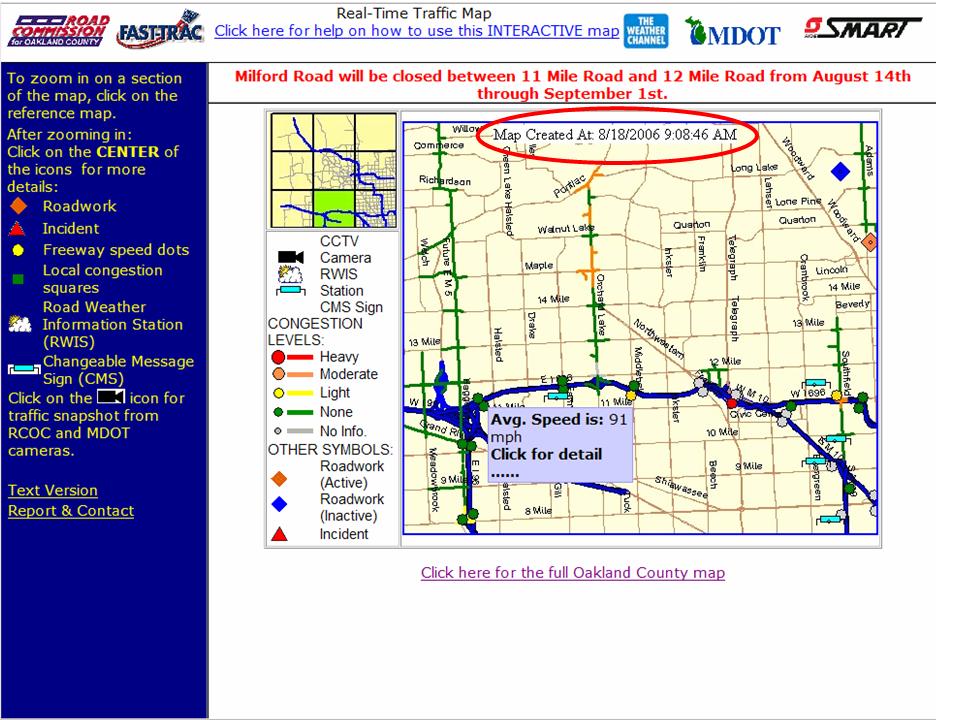
Michigan Interstate Speedway

From the Road Commission for Oakland County interactive traffic map.

CLICK ON IMAGE TO SEE ENLARGEMENT

Wednesday, August 16, 2006

Progress

Moving forward... it has a lot of nuances. Toward a goal... improvement... growth... or literally moving forward.

For as long as I care to remember, I have contacted various agencies regarding traffic problems related to "bad signals". I was at it again yesterday and today. Perhaps unfairly, I criticized the Oakland County Road Commission (Michigan) regarding poor signal progression along main roads. Turns out that my favorite example, Telegraph Road, is under the authority of MDOT, an agency to which I have written often.

Traffic management is one of those mundane efforts that, ironically, affects us a lot more than terrorist threats, but get little public attention. Poor traffic management cost millions... billions?... of dollars in wasted fuel and time. The solutions are there; the interest to implement the solutions apparently is not. The USDOT has an interesting article online that was published in 2002 and is still very relevant.

Perhaps my next effort in this arena will be to provide a voice for motorists to express their feelings about this situation. $3.00 per gallon gasoline makes everyone more conscious about forced waste.

Previous posts:

That was just last year. It seems that unless there is a threat, government really doesn't care if we are upset about something. They have their ways.

Monday, August 14, 2006

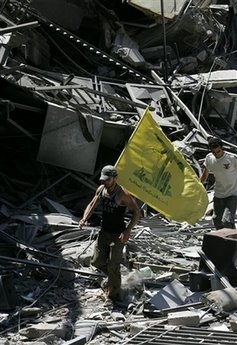
Victory

Hezbollah leader Sheik Hassan Nasrallah declared that his guerrillas achieved a "strategic, historic victory" over Israel.

AP Photo


Hmmmm.

Sunday, August 13, 2006

Inflationary Education

The Federal Reserve is concerned that the price of oil may be causing inflationary pressures in the U.S.

Well, the real culprit is the cost of tuition.

Universities, the bastion of intellectuals telling us how to live, have long known that they can be unreasonable about their tuition increases because they have the lock on the "credentials" box that people need to access for their professional futures.

Universities can be arbitrary, frivilous, wasteful, autocratic, and act with impugnity. They are the keepers of the keys.

Universities are the U.S. version of the oil cartel. Like the sheiks of the Middle East, the college boards can squeeze the people for more and more money with the promise of the good life. Unfortunately, more and more graduates are finding that they have paid a lot more for something that isn't really getting them very far... just like oil.

Friday, August 11, 2006

A Taxing Problem

I ran across this on Google that is as close to perfection as one can come:

"On my income tax 1040 it says 'Check this box if you are blind.' I wanted to put a check mark about three inches away."
- Tom Lehrer

Thursday, August 10, 2006

Hey, Connecticut ... Didja Hear The One About The...

British police thwart aircraft bomb plot

By DANICA KIRKA, Associated Press Writer 57 minutes ago

LONDON - British authorities said Thursday they had thwarted a terrorist plot to simultaneously blow up several aircraft heading to the U.S. using explosives smuggled in carry-on luggage. Heathrow was closed to most flights from Europe, and British Airways canceled all its flights Thursday between the airport and points in Britain, Europe and Libya.
Yup, Connecticut. We just have to sit down and reason with these people. We are reasonable people, so they must be reasonable people, too. Eh?

Why couldn't Joe Lieberman see this?

Wednesday, August 09, 2006

Oil as a Corrosive Substance

So the British Petroleum pipeline from Prudhoe Bay has a leak from corrosion.

What is it in oil that is corrosive, anyway? I sure don't want that stuff in my car's engine!

And water... that causes rust, too. Keep that out of my car's cooling system.

And gasoline... that's explosive and dangerous. Keep that away from my car, too.

Hmmm. I could ride a horse, but then I have to contend with horse shit. And if this bull goes on any longer, you are going to get buried in bullshit.
But here is the weirdest part.

Tuesday, August 08, 2006

Federal Reserve Holds Interest Rates

It's not as if they said they were not going to hit us, they were just not going to hit us harder... for now.

The Federal Reserve held their rate that they charge other banks for borrowing at 5.25% which doesn't sound all that bad except it translates into some pretty high rates at the consumer level.

Despite all of the talk about protecting us from inflation, I suspect it is more about protecting banks from inflation. After all, they don't want to lend money that can be paid back with inflated currency. So banks protect themselves, not us, from inflation by raising interest rates.

Monday, August 07, 2006

Are We Better Off Now?

Dr. Don Boudreaux writes in Cafe Hayek that:

Whether or not Americans are better off these days is a loaded political question. But one thing's for sure - their homes keep getting bigger.

Any American alive today who remembers 1973 and who continues to believe that ordinary Americans are no (or only slightly) materially better off today than we were thirty years ago is blind or seriously deceived.
My response was:

Again, only speculating, but my experience has show that the comparison of "household" income to 4 decades ago may be a little akin to comparing "work" with "exertion".

In this case, the obvious difference is the comparitor "household". If the percentage of two-income "household" incomes has increased in 40 years, then the comparison is purely ornamental. One would need to look at inflation-adjusted personal income to see why people might be getting the perception that they are "treading water".

After all, if it takes two people to live a lifestyle that is twice as costly as that which one person (on average) can provide, then we have only changed the definition of "household" in the sense that two incomes are now the basis for income rather than one.

Statistics that I have come across indicate that two-income homes have roughly doubled since the early 1970s. The jump from the mid-30%s to the mid-60%s could go a long way in explaining "household income" versus "individual income".

Then one has to look at the cost side of the equation... two cars to drive to work, two sets of work clothes, etc., plus childcare expense. Not really treading water... just a lot more paid work occurring.

Eh?

So we are economically better off. Are we better off? Young people have to agonize about whether or not to have children because of the economic impact it will have on their lives. Then if they have children, they have to agonize about sending them off to daycare at the tender age of two months or not. Then they have to agonize about how they can juggle their work schedules when the children get sick. And so on and so on.

I recall when our first child was born that we were a two-income household that quickly became a one-income household. Were we better off? Yes.

Saturday, August 05, 2006

Now Others Are Saying It

Check out this on Robert Reich's blog.

On June 8 I wrote the Michigan was already in a recession and on July 29 I had an entry title very similar to Mr. Reich's.

But Big Ben's clock face shows only one time... Inflation Standard Time.

Thursday, August 03, 2006

Fearing Inflation

Yes, I'd say that inflation is what everyone is worried about right now.

74 Degrees at 74 Degrees

We live in a cold world compared to the geological near past.

Now, naturally, there is concern among some that the climate may be warming a bit. After all, it has been hundreds of thousands of years since mankind left the tropics to settle in colder areas of the planet. Certainly, our life-styles could be affected by warmer average global temperatures.

But, by and large, the earth remains a cold planet compared to the planet it was when there was an expansion of the diversity of life during its lush period 50-60 million years ago (98% point of life's timeline on this planet... beginning about 2.5 billion years ago). In fact, our current condition is a planet that is rather sparse with life comparatively.

Nature has a way of changing things despite our best efforts at trying to control everything. Little things like the gap between North and South America closing certainly did more than man could ever hope to accomplish. Sure, we may have some influence on the change, but we have a long way to go before the arctic reaches 74 degrees F again (Alaska averages between 10 and 40 degrees F).

The real question is: would we have a more or less habitable world... not just for man? I don't believe that question has really been posed... much less answered.

Wednesday, August 02, 2006

Denial

We should talk about this. We should just sit down and stop fighting and come together like the reasonable people that we are... and talk about this.

Mr. Hezbollah: "Death to Zionists; death to Jews."

Mr. Israeli: "How am I supposed to talk with him?"

Mr. World Opionion: "Now we all know that those kinds of outbursts are mere rhetoric for local consumption.

Mr. Hezbollah: "We will kill them all; that is our mission."

Mr. Israeli: "And just what is the point of discussion here?"

Mr. World Opinion: "Well, now, we are sure that with the right incentives, there can be peace for all."

Mr. Hezbollah: "We will destroy them and leave them in pieces. They can have their pieces."

Mr. Israeli: "What part of fanatical terrorist don't you understand?"

Mr. World Opinion: "They are just trying to establish their right to exist."

Mr. Hezbollah: "We are the voice of the Prophet!"

Mr. Israeli: "Excuse me, but we have to deal with some incoming missiles."

Mr. World Opinion: "Now you know that those things are really not all that effective. You should try to ignore them and stop targeting women and children."

Mr. Hezbollah: "We will not stop until the Zionist pigs are gone from the face of the earth."

Mr. Israeli: "Okay, then. My jet fighter negotiators are on their way."

Mr. World Opinion: "Once again, the Israelis have over-reacted and we will all have to suffer with higher oil prices."

Can"t Find It?

Use the SEARCH BLOG feature at the upper left. For example, try "Global Warming".

You can also use the "LABELS" below or at the end of each post to find related posts.

Blog Archive

Cost of Gasoline - Enter Your Zipcode or Click on Map

CO2 Cap and Trade

There is always an easy solution to every human problem—neat, plausible, and wrong.
Henry Louis Mencken (1880–1956)
“The Divine Afflatus,” A Mencken Chrestomathy, chapter 25, p. 443 (1949)
... and one could add "not all human problems really are."
It was beautiful and simple, as truly great swindles are.
- O. Henry
... The Government is on course for an embarrassing showdown with the European Union, business groups and environmental charities after refusing to guarantee that billions of pounds of revenue it stands to earn from carbon-permit trading will be spent on combating climate change.
The Independent (UK)

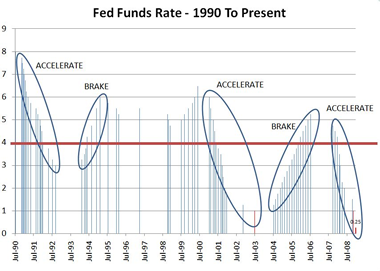
Tracking Interest Rates

Tracking Interest Rates

FEDERAL RESERVE & HOUSING

SEARCH BLOG: FEDERAL RESERVE for full versions... or use the Blog Archive pulldown menu.

February 3, 2006
Go back to 1999-2000 and see what the Fed did. They are following the same pattern for 2005-06. If it ain't broke, the Fed will fix it... and good!
August 29, 2006 The Federal Reserve always acts on old information... and is the only cause of U.S. recessions.
December 5, 2006 Last spring I wrote about what I saw to be a sharp downturn in the economy in the "rustbelt" states, particularly Michigan.
March 28, 2007
The Federal Reserve sees no need to cut interest rates in the light of adverse recent economic data, Ben Bernanke said on Wednesday.
The Fed chairman said ”to date, the incoming data have supported the view that the current stance of policy is likely to foster sustainable economic growth and a gradual ebbing in core inflation”.

July 21, 2007 My guess is that if there is an interest rate change, a cut is more likely than an increase. The key variables to be watching at this point are real estate prices and the inventory of unsold homes.
August 11, 2007 I suspect that within 6 months the Federal Reserve will be forced to lower interest rates before housing becomes a black hole.
September 11, 2007 It only means that the overall process has flaws guaranteeing it will be slow in responding to changes in the economy... and tend to over-react as a result.
September 18, 2007 I think a 4% rate is really what is needed to turn the economy back on the right course. The rate may not get there, but more cuts will be needed with employment rates down and foreclosure rates up.
October 25, 2007 How long will it be before I will be able to write: "The Federal Reserve lowered its lending rate to 4% in response to the collapse of the U.S. housing market and massive numbers of foreclosures that threaten the banking and mortgage sectors."
November 28, 2007 FED VICE CHAIRMAN DONALD KOHN
"Should the elevated turbulence persist, it would increase the possibility of further tightening in financial conditions for households and businesses," he said.

"Uncertainties about the economic outlook are unusually high right now," he said. "These uncertainties require flexible and pragmatic policymaking -- nimble is the adjective I used a few weeks ago."
http://www.reuters.com/

December 11, 2007 Somehow the Fed misses the obvious.
fed_rate_moves_425_small.gif
[Image from: CNNMoney.com]
December 13, 2007 [from The Christian Science Monitor]
"The odds of a recession are now above 50 percent," says Mark Zandi, chief economist at Moody's Economy.com. "We are right on the edge of a recession in part because of the Fed's reluctance to reduce interest rates more aggressively." [see my comments of September 11]
January 7, 2008 The real problem now is that consumers can't rescue the economy and manufacturing, which is already weakening, will continue to weaken. We've gutted the forces that could avoid a downturn. The question is not whether there will be a recession, but can it be dampened sufficiently so that it is very short.
January 11, 2008 This is death by a thousand cuts.
January 13, 2008 [N.Y. Times]
“The question is not whether we will have a recession, but how deep and prolonged it will be,” said David Rosenberg, the chief North American economist at Merrill Lynch. “Even if the Fed’s moves are going to work, it will not show up until the later part of 2008 or 2009.”
January 17, 2008 A few days ago, Anna Schwartz, nonagenarian economist, implicated the Federal Reserve as the cause of the present lending crisis [from the Telegraph - UK]:
The high priestess of US monetarism - a revered figure at the Fed - says the central bank is itself the chief cause of the credit bubble, and now seems stunned as the consequences of its own actions engulf the financial system. "The new group at the Fed is not equal to the problem that faces it," she says, daring to utter a thought that fellow critics mostly utter sotto voce.
January 22, 2008 The cut has become infected and a limb is in danger. Ben Bernanke is panicking and the Fed has its emergency triage team cutting rates... this time by 3/4%. ...

What should the Federal Reserve do now? Step back... and don't be so anxious to raise rates at the first sign of economic improvement.
Individuals and businesses need stability in their financial cost structures so that they can plan effectively and keep their ships afloat. Wildly fluctuating rates... regardless of what the absolute levels are... create problems. Either too much spending or too much fear. It's just not that difficult to comprehend. Why has it been so difficult for the Fed?

About Me

My photo
Michigan, United States
Air Force (SAC) captain 1968-72. Retired after 35 years of business and logistical planning, including running a small business. Two sons with advanced degrees; one with a business and pre-law degree. Beautiful wife who has put up with me for 4 decades. Education: B.A. (Sociology major; minors in philosopy, English literature, and German) M.S. Operations Management (like a mixture of an MBA with logistical planning)