READ ABOUT DETROIT AND SOLUTIONS TO ITS PROBLEMS. CLICK HERE.

Sunday, October 22, 2006

Freedom of Religion or Anarchy?

Does Freedom of Religion trump everything else?

Not according to a local judge who dismissed a woman's claim against a car rental agency because she refused to remove her veil in court.

Now, I don't really know if that is fair or not. It was up to the judge's discretion. But last year, a student at the University of Detroit was allowed to openly wear his dagger on the grounds that it was an integral part of his religious belief.

I suspect that the anti-Muslim sentiment prevailing in the U.S. might have had something to do with the judge's decision. There is an uneasiness and distrust around someone who hides their face from the world. It is a cultural thing in the West: "you have something unsavory to hide."

And that is the crux of the issue: distrust. As Jack Straw said: "I felt uncomfortable about talking to someone 'face to face' who I could not see."

Let's face it, the veil has little to do with what people are saying or doing. It boils down to this: the West does not trust Islam; it does not consider Islam to be a legitimate religion because so many of its adherents use covert, violent actions against so many in the West. If a Buddhist woman chose to wear a veil in court, the judge would not have had one qualm about it. But a Muslim woman is part of a religion that tolerates or, in some areas, fosters intolerance and violence.

The judge's reaction was not a matter of law; it was simply a reaction to a symbol that is, increasingly, seen as anti-Western.

Friday, October 20, 2006

Good, no Bad, no Good!, no Bad!

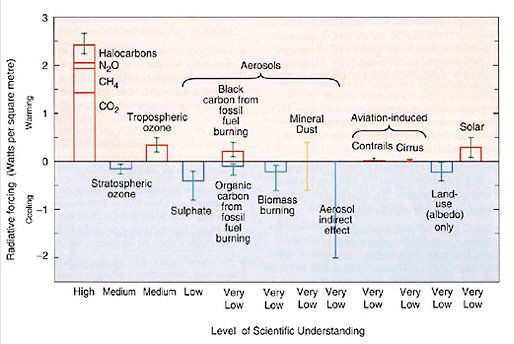
Two interesting views of the economy:

Why can't we all just get along?
- Rodney King

Thursday, October 19, 2006

China - The Replacement for the U.S.?

Oh, I'm not talking about the next big democracy.

Take a look at this article from Inc. Magazine... the entrepreneurial magazine.

It is an excellent presentation of many the facets of the emerging China. Back some time ago, I pondered how someone making 45-cents per hour could live so well in China. This article answered that and confirmed my position: it's funny money.

But that's not really the importance of this article. Take the time to read it. Then go to Cafe Hayek and read all of the comments about how U.S. business is so inefficient that it has to outsource to China and that it is so good for us to do so.

Then, if you still feel like going to Wal-Mart to by some "China-priced" goods... have at it.

Wednesday, October 18, 2006

Opposition is Easy

Two blogs I enjoy reading are Cafe Hayek and Reich's Blog. The most recent posts were about opposing... health care for the poor in the former and all things Bush in the latter.

I like to oppose as well. It's fun to wield the needle. But, then you have to propose something in place of what you oppose.

In the case of the Cafe Hayek post about health care for the poor, it was to let things stay as they are... the poor must not need health care. I pointed out that we have public education that may not be necessary for middle and upper classes, but a private alternative for the lower-income strata is not an option. It is more expensive for ME, but then I benefit from not having masses of uneducated people clogging the streets. Likewise, I would benefit from having people would could not afford the high cost of health care (due in part to the lawyers who have sued the hell out of the medical profession and raised the costs for everyone else), have some form of care that does not require them to seek attention at expensive emergency rooms where the cost is then passed on to everyone else... and service reduced as well.

In the case of Reich's Blog, he made some reasonable points about the political conundrum facing the Democrats and some issues about hedge fund abuses.... Then he went on to make a blatantly false accusation that Cheney wants to start bombing Iran and North Korea's nuclear facilities. This has no basis in anything reported by anyone credible... other than some speculation by fringe Democrats.

"Cheney wants to bomb Iran's and North Korea's nuclear facilities. He's become even more hawkish than before, and Rice is no match for him. He's the president of American foreign policy. He figures he has only about 18 months left to do what needs to be done, to ensure his and Bush's legacy and make the world safe from the axis of evil. He also figures Iran and North Korea are becoming ever more dangerous, that no one else is willing to do anything about them, that the US has the fire power to do what needs to be done, and only whimps are putting up a fight inside the Administration. All he needs to do is convince Bush, who is coming around."
They say it isn't so when the Koreans were testing a long range missile and again when they were testing the nuclear bomb:
My response to Bob Reich was "what SPECIFIC ACTIONS do you recommend" since he needs to make up false positions about Bush/Cheney. After all, North Korea has been researching and developing a nuclear weapon for at least 2 decades and probably more.

We need a proposal here, not just an opposal.... Come on, Bob!

Tuesday, October 17, 2006

Rights or Wrongs

In today's Cafe Hayek, Dr. Boudreaux references an article he wrote for The Christian Science Monitor about health care. With regard to the notion that healthcare was a right, he wrote:

Sounds noble. But not everything that is highly desirable is a right. Most rights simply oblige us to respect one another's freedoms; they do not oblige us to pay for others to exercise these freedoms. Respecting rights such as freedom of speech and of worship does not impose huge demands upon taxpayers.

Healthcare, although highly desirable, differs fundamentally from these rights. Because providing healthcare takes scarce resources, offering it free at the point of delivery would raise its cost and reduce its availability.
He then went on to explain that the government is inept and would bungle the process and make it too costly.

Well, there is some truth to that perhaps, but one often weighs the cost of government provided services versus no services. If you are a successful professor of economics at a prestigious university, your perspective may be somewhat different from a poor, single mother or a poor, elderly person. My response was:

Interesting argument.

Now substitute "education" for "health care".

Now substitute "social security" for "health care".

It's beginning to sound very 18th century. "Let them eat cake."

Oh, by the way, Dr. Boudreaux's university is state supported!

Friday, October 13, 2006

Ethnic Divisiveness - Europe Running Out of Patience

Back in August 2005, I wrote that:

Muslims seem to have forgotten that the recent decades of Western European tolerance is really not part of their history... quite the contrary. First Spain, then Denmark, now Britain; these are strategic mistakes by the Islamic radicals.
A couple of days ago, The New York Times featured an article by their European correspondents that stated:
BRUSSELS, Oct. 10 — Europe appears to be crossing an invisible line regarding its Muslim minorities: more people in the political mainstream are arguing that Islam cannot be reconciled with European values....

For years those who raised their voices were mostly on the far right. Now those normally seen as moderates — ordinary people as well as politicians — are asking whether once unquestioned values of tolerance and multiculturalism should have limits.

Former Foreign Secretary Jack Straw of Britain, a prominent Labor politician, seemed to sum up the moment when he wrote last week that he felt uncomfortable addressing women whose faces were covered with a veil. The veil, he wrote, is a “visible statement of separation and difference.”

So strong is the fear that Dutch values of tolerance are under siege that the government last winter introduced a primer on those values for prospective newcomers to Dutch life: a DVD briefly showing topless women and two men kissing. The film does not explicitly mention Muslims, but its target audience is as clear as its message: embrace our culture or leave.

Perhaps most wrenching has been the issue of free speech and expression, and the growing fear that any criticism of Islam could provoke violence.

In France last month, a high school teacher went into hiding after receiving death threats for writing an article calling the Prophet Muhammad “a merciless warlord, a looter, a mass murderer of Jews and a polygamist.” In Germany a Mozart opera with a scene of Muhammad’s severed head was canceled because of security fears.

With each incident, mainstream leaders are speaking more plainly. “Self-censorship does not help us against people who want to practice violence in the name of Islam,” Chancellor Angela Merkel of Germany said in criticizing the opera’s cancellation. “It makes no sense to retreat.”
Yes, Europe is beginning the process of isolating and removing the Muslim culture from its boundaries. It is not going to be pleasant, but it is wholly expected.

Thursday, October 12, 2006

Excessive Spending - Keep Minimum Wages Down

Yes, keep minimum wages down. That's what is advocated in Cafe Hayek, a site moderated by two George Mason University professors.

As a direct response to that, I wrote the following comment on their site:

"Let them eat cake."

I believe that was spoken by a French economist who didn't understand the connection between economic theory and political reality.

Hmmm.

Then, Cafe Hayek had another post that expanded on the notion that raising minimum wages nationally makes companies uncompetitive and forces layoffs.

My response was:

If keeping wages low were the key to competing, then Costco would not be able to compete with Wal-Mart/Sam's Club. The fact that Costco not only competes, but pays significantly higher wages AND has higher customer satisfaction shows how spurious the argument against raising minimum wages is.

The number of employees affected would be a small fraction of total employment, but the positive impact to those employees would be significant.

Coffee shop tales notwithstanding, the fact is that minimum wage rates have never been the measure of any company's ability to compete.

They also quoted the "Coyote Blog" where the following was stated:

"In a number of locations, we have been forced by rising minimum wages and associated costs (particulalry workers comp.) to switch some of our cleaning and landscaping duties from our live on-site employees to local contractors. These contractors may pay their workers more than minimum wage, but the workers are often twice as productive as ours, yielding a cost savings for us. When minimum wages are $5.15 an hour, these contractors can't compete with our own workers, but when minimum wages rise over $7.00, as they are across the west coast, this option starts to become attractive."

My response to that post was:

Hmmm. As a small business owner, I would have to say that you are just making excuses for your own business inefficiency. After all, these contractors will have to pay the same minimum wages, so why can they do it and succeed when you do it and fail?

The argument about "affordability" is a red herring.

In an email to Prof. Russell of GMU, I wrote:
Perhaps, instead of railing against a few extra dollars an hour, you and your fellow economists can devise a workable roadmap from subsistence to success that can be taken to the single parents in the poor sections of Detroit and similar cities... one where money really doesn't matter. Of course, one could always say economics deals with the larger picture and creating workable "roadmaps" is not part of that process. Too many variables, etc. Yes, one could say that... and that increasing the minimum wage is a bad thing for the recipients... and it is okay to create a Catch-22, where you need a better education to get out of poverty, but it costs too much to get that education if you are earning "minimum wages"... and it's good for the poor to have competition between U.S. workers and Chinese workers for the entry-level jobs that are the path out of the minimum-wage trap.

One could say those things... and nothing is solved... but the macro numbers look good. At some point, there is a need for both business and government to recognized that leaving a permanent underclass to its own devices may be more expensive in the long run than creating and managing processes to address the situation. Lowering corporate taxes and outsourcing entry-level jobs has helped corporations, but not necessarily translated into opportunity for those on the lowest economic rung in the U.S. So, if increasing the minimum wage is too costly as a first step, what is the first step?
The U.S. has a healthy overall economy (despite pockets of recession like Michigan). Capitalism is the engine of the economy. But if capitalism has no room for compassion, then perhaps we must question its tenets. A system that care only for the winners does not necessarily reflect the founding principles of this country.

The pilgrims did not operate their settlements on the basis of "I got mine."

Thursday, October 05, 2006

Not Like Detroit

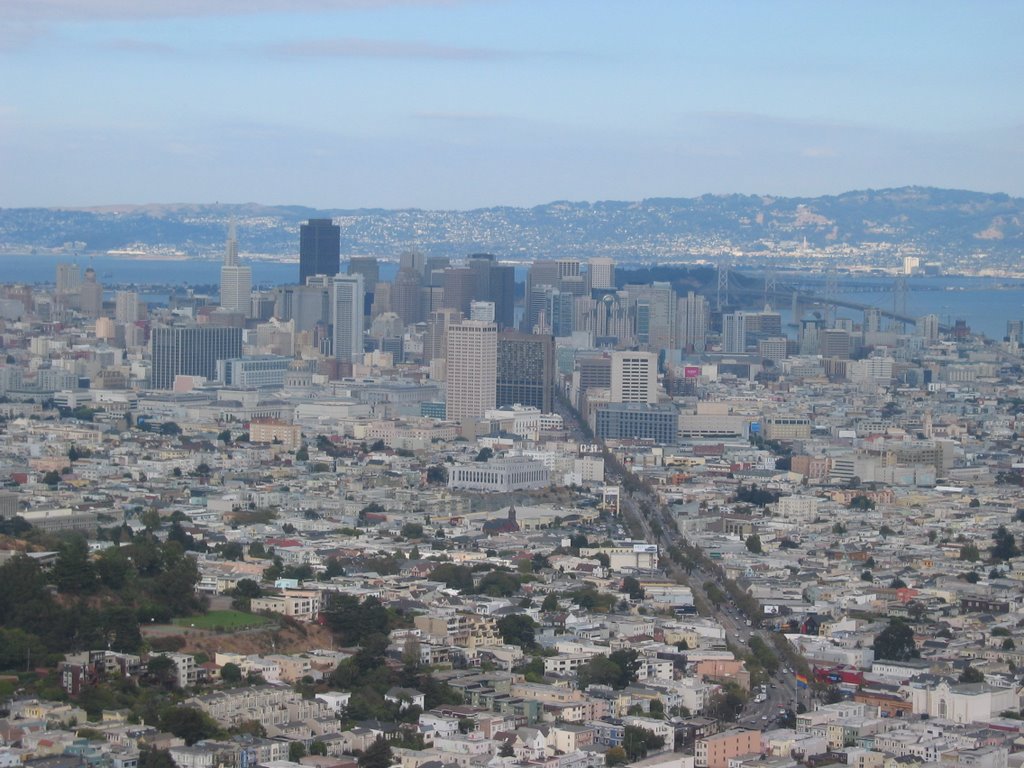
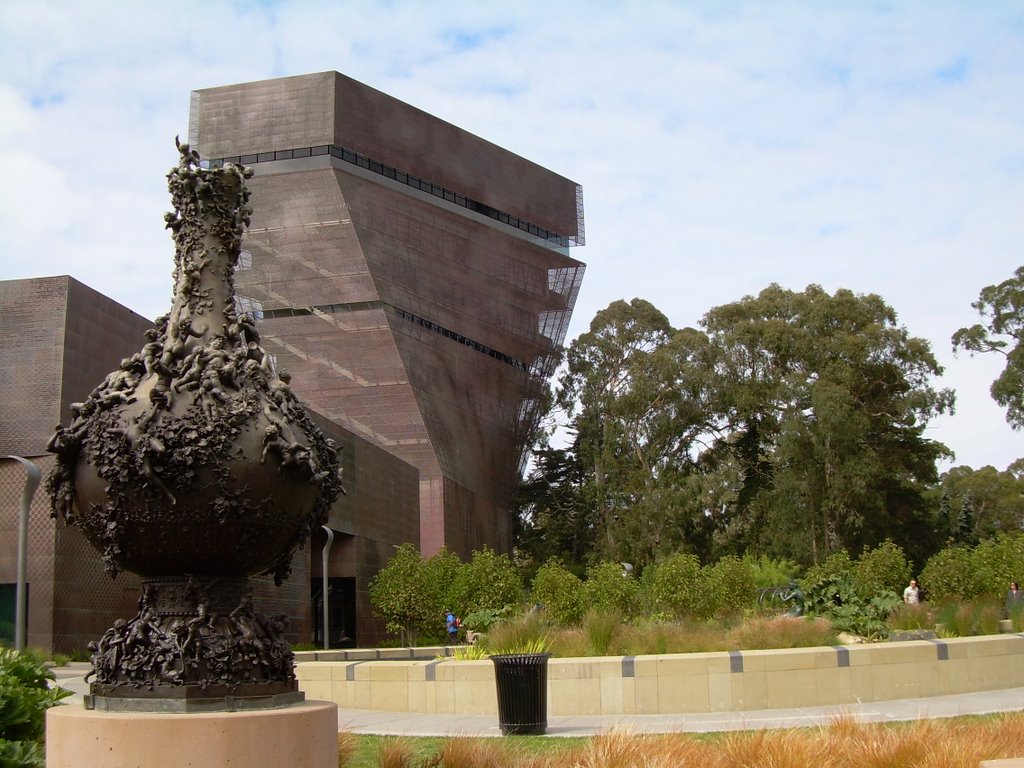
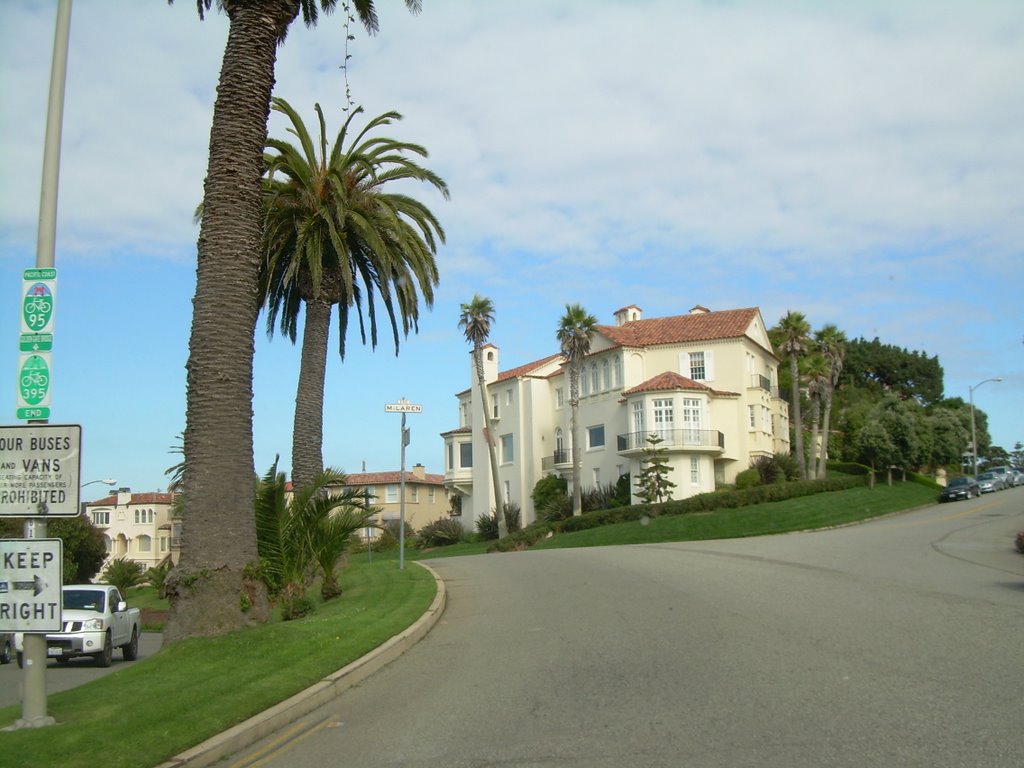
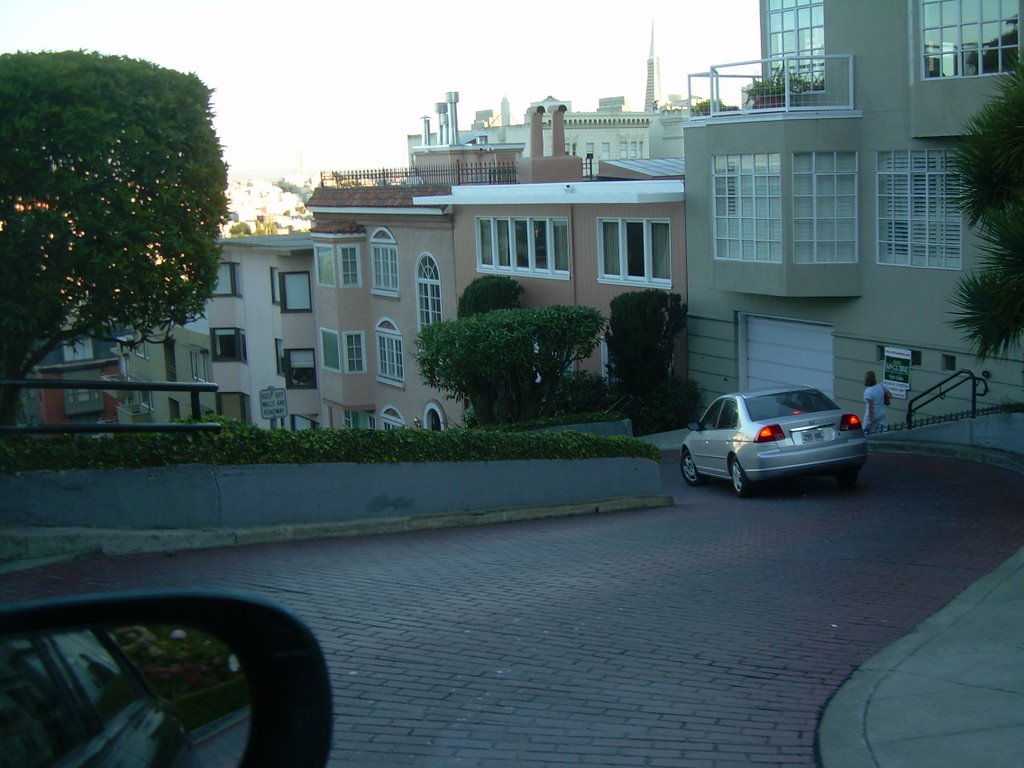
After a short visit and some 300+ photos later, I've returned from San Francisco with another perspective about Detroit and southeastern Michigan. Some history first:

  • Detroit area was settled in the early 1600s; San Francisco started with a Franciscan mission around 1776.
  • Detroit reached a peak population of 1.8 million in 1950 and has declined to about 880,000 or less; San Francisco has had a relatively stable population of about 750,000 restricted by space and cost of housing.
  • Detroit's population is about 87% black and 13% white; San Francisco is about 50% white, 30% Asian, 8% black, and the remainder miscellaneous.
  • In 2003, Detroit had 29,000 violent crimes; San Francisco had less than 6,000.
  • In 2002, Detroit had a median income of $30,000; San Francisco had a median income of almost $60,000.
Detroit, unfortunately, represents the worst of what comprises a large, American city; San Francisco represents the best. San Francisco has some natural advantages over Detroit, but not as many as you might think to make the difference between the two cities.

You can click on the photos to see a larger image. Then use your "back" button to come back to this blog.


Thursday, September 28, 2006

Persistence Pays... Maybe

I received a call from the county Road Commission today. I have been a thorn in their side for quite awhile, but I have to say that Oakland County has been reasonably responsive. A lot of my issues are actually with the Michigan Department Of Transportation, but the county gets to process the complaints.

I did learn that some of the great things that were supposed to have been done over the past few years in the area of traffic management actually did not get done. All of those computerized signals that were supposed to optimize traffic... well, a lot of them aren't there. And, therefore, the high-traffic routes are disrupted by mechanical timers that lose their timing and create traffic "bunching"... clusters of vehicles that go from one red light to the next.

The Road Commission representative said that she would see to it that the specific problems I identified would be checked out by an engineer and corrected. That's great, but as long as the system is not upgraded, it will be a losing battle for commuters. Still, I applaud the Road Commission of Oakland County for trying to be responsive and responsible. Now, about MDOT....

Sunday, September 24, 2006

Catholics Threaten Cartoonist


Angry Catholics around the world threatened cartoonist Mike Thompson of the Detroit Free Press with death and beheading for publishing the cartoon depicting "fallible" popes. Catholics chanted "death to Mike," "death to the infidel" as they burned copies of the newspaper and declared a "Holy Crusade" against the "unbeliever"...

or not.

Monday, September 18, 2006

Muslim Reaction: Same Song 2nd Verse

... a little louder, a little worse....

Back in February I wrote about Muslim reaction to cartoons about Mohammed.

It appears that nothing has changed:

  • An elderly nun was killed in Somalia
  • Two churches were set afire on the West Bank
  • Protests occurred in Iran
  • Al Crummy declared the that the Pope and the West are "doomed"
Meanwhile, Christians, Buddhists, Hindus, Jews and others went about their daily lives.

As I said Friday, you can protest all you want, but if it is written and said and done... it's what it is.

Friday, September 15, 2006

Pots and Kettles

My unprovable beliefs are better than your unprovable beliefs.

By SUZAN FRASER, Associated Press Writer

ANKARA, Turkey - Muslims around the world expressed outrage Friday over Pope Benedict XVI's comments on Islam, with Turkey's ruling party accusing him of trying to revive the spirit of the Crusades and scores taking to the streets in protest

Pakistan's parliament unanimously condemned the pope, and the Foreign Ministry summoned the Vatican's ambassador to express regret over the remarks.

The Vatican said the pope did not intend the remarks — made in Germany on Tuesday during an address at a university — to be offensive.

Benedict quoted from a book recounting a conversation between 14th century Byzantine Christian Emperor Manuel Paleologos II and a Persian scholar on the truths of Christianity and Islam.

"The emperor comes to speak about the issue of jihad, holy war," the pope said. "He said, I quote, 'Show me just what Muhammad brought that was new, and there you will find things only evil and inhuman, such as his command to spread by the sword the faith he preached.'"
People really get angry when you express something negative about their most closely held beliefs... probably because they know that they can only believe what they believe, not prove what they believe... especially when there is a provable assessment about what they believe... this is what is written; this is what is said; this is what is done.

Of course, using a 14th century reference from someone who supported 14th century Christian beliefs and actions is a lot like the pot calling the kettle black.

Thursday, September 14, 2006

Ahh! September!!!

Golfing in the 60s (temperatures not scores) with cider and doughnuts afterward. The only thing that could be better is scoring in the 60s, too.

Okay, not everything in Michigan is getting bad.

Tuesday, September 12, 2006

Path to 9/11

Kudos to ABC for its two-day broadcast of "The Path To 9/11". If you didn't see it, you can.
ABC did a risky and classy thing with this broadcast.

It was very difficult to watch it, but it's something that Americans should. While the portrayals may have offended some, the people portrayed did not have the benefit of 20-20 hindsight. It was amazing that some government officials actually tried to do the right thing and, at times, succeeded. The message was pretty clear to anyone watching: us or them.

It was also pretty clear that the Geneva convention doesn't apply... even if politicans and judges want to say it does. But that's another matter.

Monday, September 11, 2006

Uncivilized and Barbaric

September 11, 2001: the actions of those who caused the destructive events were uncivilized and barbaric. That does not mean they were unintelligent; it just means they are representative of a way of thinking that is the opposite of:

Dictionary.com Unabridged (v 1.0.1) - civ‧i‧lized  [siv-uh-lahyzd] Pronunciation Key - Show IPA Pronunciation
–adjective
1.having an advanced or humane culture, society, etc.
2.polite; well-bred; refined.
3.of or pertaining to civilized people


It also means, however, that they are ignorant of the Western culture to the extent that they believe that the Western world will convert to Islam under threat of death... anymore than it would convert to Nazism under threat of death.

Right now, these so-called Jihadists are nothing more than a major annoyance to the West. They cause some damage and hurt some people, but do not represent a substantial threat. But, in the future, if they actually pose a significant threat to the West, there will be an unprecedented price they pay for that... and Geneva convention violations will be the least of their worries.

Civilization is a thin veneer when ones world is threatened. The Jihadists, whether wildly disturbed individuals or rogue nations will learn that even nuclear weapons in their hands ensures nothing except a larger target on their backs. They will learn that even though they may be intelligent, cunning, brutal and fanatic... they will be tremendously stupid to do more than they have already done.

I believe that if there is another military action against a rouge nation or geography dominated by these people, it will not involve many land-based troops or nation rebuilding. The patience of the U.S. is running very short... and the willingness to be "civilized" toward these people is evaporating.

Tuesday, September 05, 2006

Inflationary Education - Part 2

A recent comment regarding my assertion that the cost of college education, which affects tens of millions of Americans, as a large contributing factor to overall inflation was criticized as unfair with the blame being placed on Medicaid.

While it is true that there have been some cutbacks in state support recently, the fact remains that SINCE 1958 the rate of tuition increase has been from 1.5-2.0 times general inflation.

It really boils down to two things:

  1. colleges and universities can have large increases in tuition year after year because our society places a premium on a college education, and
  2. colleges and universities choose to have large increases in tuition year after year to fund non-teaching efforts (and fairly hefty salaries for college presidents).
Nevertheless, colleges and universities are quick to point out the fiscal management shortcomings of business and government.

Monday, September 04, 2006

Not Feeling Your Pain

Visitors to the Cafe Hayek might be surprised to see how little empathy? there is toward the situation so many wage earners find themselves in today: declining real income. Rather, there are strong arguments made that because technology has improved the products we buy, even if the median income is declining (which they argue is not the case), our standard of living is increasing rapidly.

I think the only qualification is whether declining real incomes (if that is the case) allows the same number of people to buy the kind of products they would have purchased had their incomes kept pace with the costs of living. After all, if you can't afford to buy better products, you can't really enjoy them... or is that too self-evident?

Saturday, September 02, 2006

South of the Border

With all of the focus on the Middle East, most Americans... and the government, too?... seem to be ignoring what is happening in Mexico.

There is a growing movement away from the idea of a free-market, centrist government toward the socialist approach of Andres Manuel Lopez Obrador. The prospect of another Venezuela on our border is not exactly gratifying and could cause some additional political pressure to restrict the border even more than the planned wall and patrols.

Not much has happened to change the Hispanic tradition of bungled government in Mexico, Central America and South America. It looks like stupidity continues to have its own rewards there.

Friday, September 01, 2006

Can"t Find It?

Use the SEARCH BLOG feature at the upper left. For example, try "Global Warming".

You can also use the "LABELS" below or at the end of each post to find related posts.

Blog Archive

Cost of Gasoline - Enter Your Zipcode or Click on Map

CO2 Cap and Trade

There is always an easy solution to every human problem—neat, plausible, and wrong.
Henry Louis Mencken (1880–1956)
“The Divine Afflatus,” A Mencken Chrestomathy, chapter 25, p. 443 (1949)
... and one could add "not all human problems really are."
It was beautiful and simple, as truly great swindles are.
- O. Henry
... The Government is on course for an embarrassing showdown with the European Union, business groups and environmental charities after refusing to guarantee that billions of pounds of revenue it stands to earn from carbon-permit trading will be spent on combating climate change.
The Independent (UK)

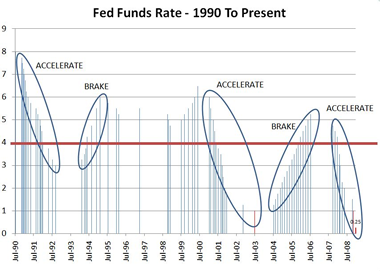
Tracking Interest Rates

Tracking Interest Rates

FEDERAL RESERVE & HOUSING

SEARCH BLOG: FEDERAL RESERVE for full versions... or use the Blog Archive pulldown menu.

February 3, 2006
Go back to 1999-2000 and see what the Fed did. They are following the same pattern for 2005-06. If it ain't broke, the Fed will fix it... and good!
August 29, 2006 The Federal Reserve always acts on old information... and is the only cause of U.S. recessions.
December 5, 2006 Last spring I wrote about what I saw to be a sharp downturn in the economy in the "rustbelt" states, particularly Michigan.
March 28, 2007
The Federal Reserve sees no need to cut interest rates in the light of adverse recent economic data, Ben Bernanke said on Wednesday.
The Fed chairman said ”to date, the incoming data have supported the view that the current stance of policy is likely to foster sustainable economic growth and a gradual ebbing in core inflation”.

July 21, 2007 My guess is that if there is an interest rate change, a cut is more likely than an increase. The key variables to be watching at this point are real estate prices and the inventory of unsold homes.
August 11, 2007 I suspect that within 6 months the Federal Reserve will be forced to lower interest rates before housing becomes a black hole.
September 11, 2007 It only means that the overall process has flaws guaranteeing it will be slow in responding to changes in the economy... and tend to over-react as a result.
September 18, 2007 I think a 4% rate is really what is needed to turn the economy back on the right course. The rate may not get there, but more cuts will be needed with employment rates down and foreclosure rates up.
October 25, 2007 How long will it be before I will be able to write: "The Federal Reserve lowered its lending rate to 4% in response to the collapse of the U.S. housing market and massive numbers of foreclosures that threaten the banking and mortgage sectors."
November 28, 2007 FED VICE CHAIRMAN DONALD KOHN
"Should the elevated turbulence persist, it would increase the possibility of further tightening in financial conditions for households and businesses," he said.

"Uncertainties about the economic outlook are unusually high right now," he said. "These uncertainties require flexible and pragmatic policymaking -- nimble is the adjective I used a few weeks ago."
http://www.reuters.com/

December 11, 2007 Somehow the Fed misses the obvious.
fed_rate_moves_425_small.gif
[Image from: CNNMoney.com]
December 13, 2007 [from The Christian Science Monitor]
"The odds of a recession are now above 50 percent," says Mark Zandi, chief economist at Moody's Economy.com. "We are right on the edge of a recession in part because of the Fed's reluctance to reduce interest rates more aggressively." [see my comments of September 11]
January 7, 2008 The real problem now is that consumers can't rescue the economy and manufacturing, which is already weakening, will continue to weaken. We've gutted the forces that could avoid a downturn. The question is not whether there will be a recession, but can it be dampened sufficiently so that it is very short.
January 11, 2008 This is death by a thousand cuts.
January 13, 2008 [N.Y. Times]
“The question is not whether we will have a recession, but how deep and prolonged it will be,” said David Rosenberg, the chief North American economist at Merrill Lynch. “Even if the Fed’s moves are going to work, it will not show up until the later part of 2008 or 2009.”
January 17, 2008 A few days ago, Anna Schwartz, nonagenarian economist, implicated the Federal Reserve as the cause of the present lending crisis [from the Telegraph - UK]:
The high priestess of US monetarism - a revered figure at the Fed - says the central bank is itself the chief cause of the credit bubble, and now seems stunned as the consequences of its own actions engulf the financial system. "The new group at the Fed is not equal to the problem that faces it," she says, daring to utter a thought that fellow critics mostly utter sotto voce.
January 22, 2008 The cut has become infected and a limb is in danger. Ben Bernanke is panicking and the Fed has its emergency triage team cutting rates... this time by 3/4%. ...

What should the Federal Reserve do now? Step back... and don't be so anxious to raise rates at the first sign of economic improvement.
Individuals and businesses need stability in their financial cost structures so that they can plan effectively and keep their ships afloat. Wildly fluctuating rates... regardless of what the absolute levels are... create problems. Either too much spending or too much fear. It's just not that difficult to comprehend. Why has it been so difficult for the Fed?

About Me

My photo
Michigan, United States
Air Force (SAC) captain 1968-72. Retired after 35 years of business and logistical planning, including running a small business. Two sons with advanced degrees; one with a business and pre-law degree. Beautiful wife who has put up with me for 4 decades. Education: B.A. (Sociology major; minors in philosopy, English literature, and German) M.S. Operations Management (like a mixture of an MBA with logistical planning)