READ ABOUT DETROIT AND SOLUTIONS TO ITS PROBLEMS. CLICK HERE.

Monday, June 02, 2008

Weeding Out The Unfit

SEARCH BLOG: CULTURE and RELIGION

My sons enjoy the Darwin Awards that are given out for fatal stupidity. As I repeatedly told them while they were growing into fine, young men: "Stupidity has its own rewards."

This has nothing to do with IQ. "Stupid is as stupid does." This has more to do with preconceived or distorted notions about the world.

Some stupidity is at a personal level; some people simply cannot relate to other people. Marriages are a disaster. Friendships, if ever formed, are ephemeral. These people can be brilliant in other ways, but don't have a clue about personal relationships and act accordingly.

Some stupidity is on a broader social level. These people tend to be parochial in their views and quick to condemn. They never seem to advance socially or in business despite their brilliance... unless, of course, they work for themselves. Then they can disregard direction or suggestions from their non-existent colleagues.

But the worst stupidity is on a cultural level. When a culture creates a mythology about the world or universe and disregards the obvious, nature has a way of ensuring that culture either fails or stays subordinated. I have my own list of Darwin Awards for cultural stupidity... and I'm sure you have yours.

Mine center around the idea that "God demands it" is sufficient reason to do horrible things. That presumes three things that all come together in a package:
  1. There is a controlling deity
  2. The deity is personally interested in individuals
  3. The deity has demanded that individuals do terrible things to themselves, their family, and others
The last part might be interpreted as psychotic except that on a cultural level it is perverse. It is also Darwinian stupid.

..

Sunday, June 01, 2008

A Cold Start To 2008

SEARCH BLOG: WEATHER

These charts tell the story:


[did not gather local data for January]


This weekend, I spoke with a person from Traverse City [the top of Michigan's lower peninsula] who said that the fruit trees bloomed late, few bees were out to pollinate, and then there were two hard freezes. I also spoke to a person from Minnesota north of Duluth who said the plants were barely out of the ground.

Now we hear reports that the southern hemisphere is experiencing a lot of colder-than-usual weather.

Meanwhile, our politicians are busy thinking up ways to make heating more expensive... or not up to demand like South Africa.

..

Saturday, May 31, 2008

Smaller Cars Are Half Of The Answer

This is a repeat of an earlier post. Now that gasoline has gone from $2 to $4 per gallon, perhaps it is time to take a serious look at this:

SEARCH BLOG: CO2 and TRAFFIC SIGNALS

I've had forum discussions as well as private email exchanges with those who are concerned about CO2 increases in the atmosphere.

Some, but not all, are understanding of the situation enough to admit that the relationship of CO2 to climate change is complex because there are so many other potential factors... and the fact that CO2 increases have, historically, followed temperature increases... not vice versa. And then there is the matter of CO2 concentrations being much higher... as much as 16 times higher... in the past while earth was in cooling phases.

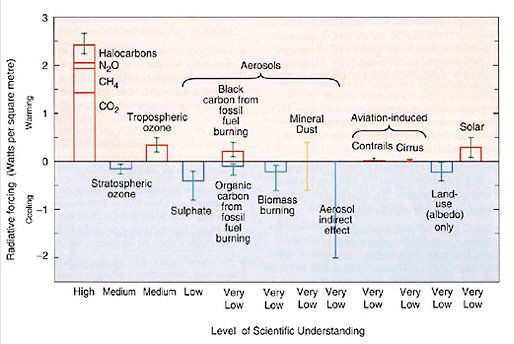
Be that as it may, most of the arguments to reduce CO2 fall into the "risk management" area. We can't afford to not reduce CO2 levels on the chance that it is the primary forcing factor in this climate change.

Fine. If you believe that reducing CO2 production immediately is critical, what should we do... now!

Well, here are some lifestyle changes that we could make:
  • Shut off unused rooms and close the heating vents in those rooms ... we do that now!
  • Replace standard light bulbs with spiral florescent bulbs ... we do that now!
  • Turn water heater temperature to a lower setting ... we do that now!
  • Turn winter heat setting to 67 degrees ... we do that now!
These are simple conservation efforts that we can implement with little effort or expense.

The next level of action becomes a little harder.
Replacing power plants that produce CO2
  • Use nuclear power instead? Well, that's something we can't do now! But conventional power plants are where the greatest CO2 production occurs.
  • Wind power? You all read about those rich, Democrat, environmentalists in Cape Cod who squelched that idea... would spoil the ocean view, you know.
Replace all vehicles with fuel-efficient vehicles:
  • Number of vehicles on the road: over 230 million
  • Median age of all vehicles: almost 9 years
That means it would take about 18 years to remove nearly all of the inefficient vehicles... if we stopped buying them now! Of course, much of the reduction would be offset by population and vehicle increases, but the rate of increase of CO2 production would be decreased gradually.

Replace all home heating and cooling systems with geothermal units.

Who will mandate that one? And they do need electricity from power plants to operate.
So, do we ignore the homeowner/consumer produced CO2, beyond turning down the heat and changing some light bulbs, and place all of the burden on businesses? Since so few of us own or work in businesses, that would work (feel the sarcasm here).

Here is something we can do now!
Contact your Department of Transportation and demand that their traffic engineers synchronize traffic signal progression! Have you ever read the city/highway EPA stickers on new vehicles ... something like 21 mpg city/29 mpg highway. That's because all of those extra hours you give up each week due to poorly timed signals also increases your cost of driving and CO2 production from unnecessary idling and acceleration. This can be corrected now!
If you want to make a big difference now, start raising the roof with your state, county and local Departments of Transportation and Traffic Engineering Departments. Poorly timed traffic lights are the single biggest, unnecesary producer of CO2 in the U.S.

Also see this.

..

Friday, May 30, 2008

Accidents Abroad

SEARCH BLOG: TRAVEL

Americans take for granted that if they become ill or are hurt in an accident that they can simply go to a local hospital and receive the care they require. For the most part, that is the case. It's not until they travel to another country that they might become aware of the differences in the way injuries are handled.

Recently, some friends of ours traveled to Portugal. They were touring an old church when the wife stepped backward and lost her balance. She landed on a hard floor and broke her hip in a couple of places. Had the accident happened in the U.S., she would have been taken to a facility where an operation would have inserted plates and screws/pins in her hip bones and secured them so that no further injury would occur and gotten her mobile again very quickly. In Portugal, she was taken to the best hospital in the area where they told our friends that they could only put her in traction for six weeks and then she would need an operation after that.

They opted to have her flown back to the U.S. in a small plane with barely enough room for the stretcher, the medical staff, and some extra gasoline tanks stored inside. After a long an indirect route, they returned to Florida where she had the operation. It's been a just few weeks, but they are here in Michigan opening up their summer cottage for the season.
My daughter-in-law and another young woman who has been her friend for quite awhile took a business trip/vacation to Argentina last week. In the middle of the night, the friend went to the bathroom and slipped on a marble floor. She broke her jaw. The local hospital said they could treat her by wiring her jaw shut, but there could be problems later.
She opted to return to the U.S. for treatment. Fortunately, the hotel covered the emergency return trip in first class... and hopefully she had adequate pain medications because the pressure changes on an airplane can make a broken bone very painful.
It's unusual to be made aware of this issue this way. My wife and I have traveled to Europe and never even thought about it. I'm sure that there are plenty of wonderful hospitals in Europe, just as there are some fairly basic facilities in the U.S. Still, whether one is traveling from or to the U.S., it is probably a good idea to know what your options are if you are injured.

..

Thursday, May 29, 2008

Real or Not-So-Real Climate

SEARCH BLOG: CLIMATE

Dr. Roger Pielke, Sr. is a bit of a maverick scientist. He likes his suppositions to be validated. So, when he looked at a climate model that contained what he believes to be a basic error and, consequently, could not be confirmed by observations, he suggested a revision to the model.

This is the end of the story:

The challenge to Gavin Schmidt and Ray Pierrehumbert at Real Climate (since Real Climate has presented a bet), therefore, is to answer these questions:

  • what amount of heat in Joules was predicted by the IPCC models to accumulate within the climate system over the last five, ten and twenty years?
  • what is the best estimate of what actually accumulated based on the observations of ocean heat content changes for these three time periods?
  • what magnitude of heat accumulation in Joules in the next five, ten, and twenty years would cause Real Climate to conclude that the IPCC models are “inconsistent” with the observations?

We would be glad to post their reply to these questions as a guest weblog on Climate Science.

Go here to read the beginning.

P.S. It's not written in high-schoolese.

..

Wednesday, May 28, 2008

No Genetic Discrimination

SEARCH BLOG: DISEASE

This new law has been widely publicized. Former presidential candidate, Ron Paul, voted against the measure which would be consistent with a position that the government should not interfere in commerce and business contracts.

While I might normally agree with Rep. Paul on this, I believe that insurance is an unusual type of business contract because it is not really between and individual and a corporation. It is a shared contract with millions of others. Whether or not we have an insight into our potential, genetically-triggered, health issues, we must share the actuarial projected costs of all others who have purchased the insurance. In other words, we pay our money and take our chances... with millions of our closest strangers.

What this legislation does, besides allowing those with potentially debilitating and expensive diseases to join the shared-risk groups, is to enable each of us to identify those potentially debilitating and expensive diseases well in advance of their occurrence and take whatever action is appropriate to eliminate or reduce those risks.

For example, some individuals carry a genetic mutation that could allow excessive iron to build up in their bodies... hemochromatosis... if they have two copies of this mutation. "Hereditary hemochromatosis is an autosomal recessive disorder associated with increased intestinal absorption of iron and deposition of excessive amounts of iron in the liver, pancreas, and other organs."

It is the most common single-gene disorder in the U.S. white population. Approximately one in 250 to 300 white persons is homozygous for the hemochromatosis gene mutation [has two copies of the mutated gene], and at least one in 10 persons is a carrier for the mutation.
This condition may have been a benefit with iron-poor diets of the past, but now many foods are iron-fortified to prevent anemia in some other portion of the population while exacerbating the iron buildup in others [another example of government meaning well... according to U.S. law, thiamine, riboflavin, niacin, and iron must be added back into refined grain products]. Someone in their twenties who has this condition may not be aware of it until their fifties or sixties when they may begin to suffer premature organ failure... or other problems.
Under the old insurance rules, if a person found out about the condition through genetic testing, insurance companies could refuse to write new policies for that person. That meant that person would not be covered for all other possible health problems... a distinct disincentive to having the testing done. Now that person can be tested for this condition and still get insurance coverage. Would that be unfair to the rest of us? Well, in this instance, it would actually be a benefit to the rest of us.

Why? Because the "treatment" is simply to give blood on a regular basis to keep the level of iron in the blood lower. A pint every two or three months. The person with this potentially debilitation "disease" lives a normal life while possibly saving the lives of many others by donating a half-gallon of blood per year. And... insurances costs are reduced because the person with the condition does not suffer the debilitating side-effects and very costly treatments later in life.
Here's the story:
Congress Passes Bill Barring Genetic Discrimination
Action culminates more than a dozen years of legislative haggling

By Lisa Stein

GENETIC SECRETS: New legislation would bar insurers and employers from discriminating based on genetic information.

The House today passed a measure by a whopping 414-to-1 margin that would prohibit health insurers from canceling or denying coverage or hiking premiums based on a genetic predisposition to a specific disease. The legislation, the Genetic Information Nondiscrimination Act (GINA), also bars employers from using genetic information to hire, fire, promote or make any other employment-related decisions.

Rep. Ron Paul (R-Tex.) was the lone dissenter.

The measure, which unanimously passed the Senate last week, now goes to President Bush, who is expected to sign it into law.

"Since no one is born with perfect genes, we are all potential victims of genetic discrimination. This legislation marks the beginning of a new era in health care where a person's genetic information can no longer be used against them,'' bill sponsor Rep. Louise Slaughter (D-N.Y.) said after the legislation sailed through the House. "By prohibiting the improper use of genetic information, Americans will be encouraged to take advantage of the tremendous life-altering potential of genetic research.''

Slaughter, a microbiologist with a Master's degree in Public Health, introduced the first genetic antidiscrimination legislation 13 years ago.

Physicians now have access to more than 1,000 genetic tests that diagnose or assess the risk of developing potentially life-threatening diseases, including breast cancer, diabetes, heart disease and Parkinson's.

Consumer advocates hailed the passage of the package, which they say will close gaps in state laws and encourage Americans to take advantage of potentially lifesaving genetic testing that they may now shun out of fear of being sacked or denied health benefits.

"With the long-awaited federal passage of GINA, researchers and clinicians can now actively encourage Americans to participate in clinical trials without the fear of genetic discrimination,'' said Joann Boughman, executive vice president of the American Society of Human Genetics (ASHG). "Furthermore, under the federal protection provided by GINA, health care practitioners will be able to recommend appropriate genetic testing and screening procedures unencumbered by the fear of discrimination based upon the results."

In the 1970s, many blacks were denied jobs and insurance coverage because they carried a gene for sickle-cell anemia, including those who lacked the two copies of a mutation necessary to get sick.

In 1998, it was revealed that Lawrence Livermore National Laboratory in Berkeley, Calif., had secretly tested employees from the 1960s to 1993 for sickle-cell anemia, syphilis and pregnancy without their knowledge or consent (they were told that they were undergoing routine cholesterol screening). In 2002, the Burlington Northern Santa Fe Railway company paid three dozen employees $2.2 million to settle a lawsuit they had filed charging that the company had genetically tested them without their knowledge after they submitted work-related injury claims.

"This bill will allow every citizen and their physicians to benefit and participate in the progress the gene therapies provide for all of us in early treatment and the prevention of countless afflictions while maintaining their essential insurance coverage," Rep. Steve Kagen, D-Wis., a physician, said in support of H.R. 493 during the debate.

"Perhaps in the near future, I'll be able to rise here on the House floor and ask that we support legislation to bring an end to all forms of discrimination in health care,'' he added. "After all, our constitutional rights protect us against discrimination and should be applied to the area of health care throughout the industry – not just genetic information, not just skin color, not just body chemistry or the content and structure of one's bones – but to everything in the human condition and every pre-existing condition. Let's begin to put discrimination where it belongs – in the past."
..

Tuesday, May 27, 2008

James Earl Carter, III

SEARCH BLOG: POLITICS

Former President, James Earl Carter, Jr., continues his anti-Israel efforts by revealing information about Israel's nuclear capability. While that information is technically secret, there has been little doubt that Israel had such capabilities. What makes this different is a former government official at the very highest level revealing state secrets.

What makes this expected is J.E. Carter, Jr.'s long history of anti-Israeli bias and incredibly poor judgment when dealing with the Arab world.
We now have another candidate for President who shows alarmingly similar tendencies. I suspect that should Barack Obama become President of the United States, Iran will feel it has an opportunity to take some action[s] that, once again, hold the U.S. hostage.
Will text messages refer to him as JC3... instead of simply BO? Jimmy Carter III.


..

Saturday, May 24, 2008

Memorial Day

SEARCH BLOG: VETERANS

This poem, written in 1915, has come to symbolize the spirit of those who died in the military while protecting us:

In Flanders Fields
By John McCrae

In Flanders fields the poppies blow
Between the crosses, row on row,
That mark our place; and in the sky
The larks, still bravely singing, fly.
Scarce heard amid the guns below.

We are the dead. Short days ago
We lived, felt dawn, saw sunset glow,
Loved, and were loved, and now we lie
In Flanders fields.

Take up our quarrel with the foe:
To you from failing hands we throw
The torch; be yours to hold it high.
If ye break faith with us who die
We shall not sleep, though poppies grow
In Flanders fields.

Decoration Day, later Memorial Day, was first observed officially on May 30, 1868, although some local observances occurred as early as 1866. Over the course of time, more wars and more deaths have occurred, but the purpose of this holiday remains the honoring of fallen soldiers... and our intention to serve with the same dedication as they did when our country was faced with enemies bent on our destruction.

I'm not sure how much of this is taught to children today. You can read the history here... and pass it on to them. Why Decoration Day?
That's the day dedicated to decorating the graves of the soldiers... the way the living said they had not forgotten the dead... or their sacrifices for us. Have we?


..

Friday, May 23, 2008

Telling Tall Tales With Trends

SEARCH BLOG: GLOBAL WARMING

We've all heard the case made for global warming: the average temperature over the past 100+ years has had an upward trend of 0.6°C.

In actuality, when you look at the data you see a starting point at a relatively low temperature [and starting points are important for trends]. Then you see a few decades going up, then down, then up, then down, then up... and, most recently, down. There may be a trend in there, but the jury is out about how temperatures have been taken during all of that time. Is it one long trend or a cyclical occurrence of short-term trends?

[illustrative data only]

What is the trend of record high state temperatures?


I could make the case that late April is going to be the warmest period in Michigan this year... based on a trend... with a high starting point [oh, those inconvenient starting points]. Just take a look at how May is progressing.

See that gold line? That's the average temperature trend for the month. I'm just going to put that in my model and see where August is going to be. Get the ice skates sharpened.

Just how long do we have to look at temperatures until we see "climate change?" I guess that's dependent upon how you define climate change. Geologically, swings of 5-10°C probably qualify as significant climate changes. In our human experience, we like to narrow that somewhat... maybe 3-5°C... because that's something that affects our comfort levels... but not necessarily our existence.
Then, if you get an 0.6°C change over a century... starting from a cold point... does that mean anything?
Did we just get climate change in May? The temperatures were supposed to go up and they went down!
You'll have to excuse me now, I have to go play with my models... data models!
..

Thursday, May 22, 2008

No More Cold Temperature Records

SEARCH BLOG: CLIMATE

The other day, I received an email from Dr. Roger Pielke, Sr. who thought this might interest me. The linked document discusses the Urban Heat Island effect for Tucson, AZ. As it is 17 pages long, here it is summarized in these two main points:

  • The urban heat island, in the simplest way to describe, is defined as an urban (or metropolitan) area often being warmer than its surroundings. As the size of an urban area (city) grows, there is a corresponding increase in average temperatures with the increase being most noticeable for low temperatures versus high temperatures.
  • The data presented in this paper shows that the likelihood that any of the current all-time daily, monthly and yearly record low minimum temperatures will be broken is slim at best, if not virtually impossible. Other factors that are tied to climate change and or global warming may have influences in Tucson, but were not addressed in this paper.

[click image for larger view]

The point to be made is that much of the argument for global warming is that average recorded temperatures have been increasing. Given the population increases and corresponding alteration of environment around cities, these average temperatures have to increase because more false warmer minimum temperatures are being produced by the encroaching city heat sinks... heat islands.
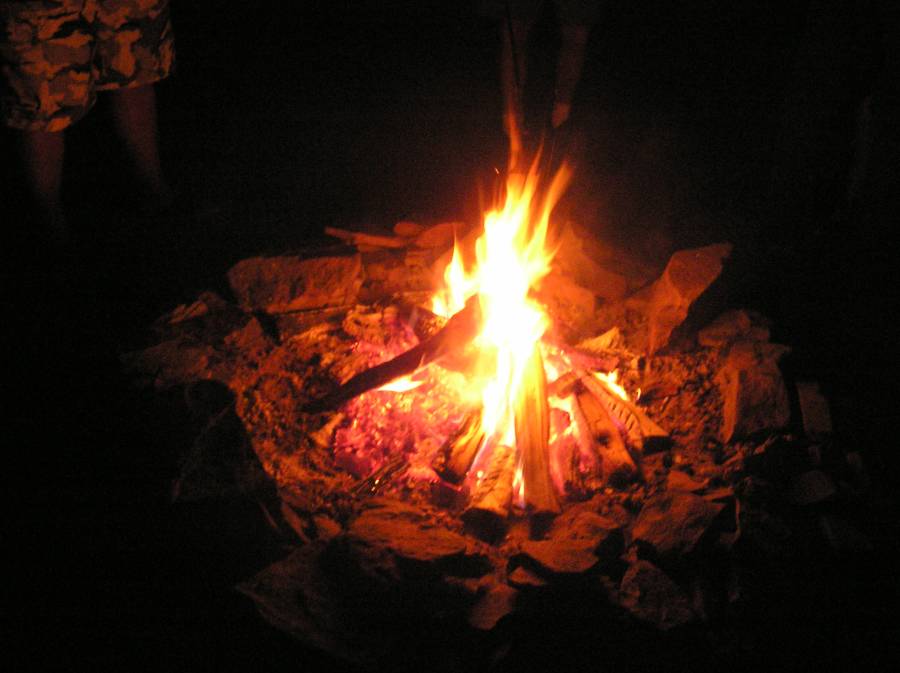
It is similar to piling rocks around a fire at a campsite. Long after the fire has gone out, the rocks radiate heat into the immediate area, keeping campers warmer during the cold nights. If you measure enough campsites in the forest, you will conclude that the forest has gotten warmer... on average... than before campers started coming to the forest.


..

Wednesday, May 21, 2008

May Weather Late

SEARCH BLOG: WEATHER

Everyone has a different weather story. It all depends on how it is "framed." But it is obvious that something is different around Michigan this year. It is still April here.

So far, we've averaged just under 4° below "normal" for the month. Going back to the beginning of February [when I started tracking this level of detail] it's been about 3° below normal. That's a lot of heating needed to keep the house at 67°.

Maybe your weather has been above normal where you live, but this is getting a little old around here.


..

April Weather Records

SEARCH BLOG: CLIMATE

While April had some late snowfalls and a lot of cool/warm regional weather, there were no new statewide maximum or minimum temperature records set.

The New York temperature record was a monthly calculated average for one town. The Montana temperature record was an absolute of -8° for one town, but the statewide minimum record for any April is -30°.

All in all, a rather uneventful month... similar to March.


..

Tuesday, May 20, 2008

How The Free Market Doesn't Work

SEARCH BLOG: OIL and CONGRESS

I thought this had to be made up [HT Infidel Bloggers Alliance]. Then I came back to my senses and realized that the U.S. Congress was involved, so the improbable became likely.

By Tom Doggett

WASHINGTON (Reuters) - The U.S. House of Representatives overwhelmingly approved legislation on Tuesday allowing the Justice Department to sue OPEC members for limiting oil supplies and working together to set crude prices, but the White House threatened to veto the measure.

The bill would subject OPEC oil producers, including Saudi Arabia, Iran and Venezuela, to the same antitrust laws that U.S. companies must follow.

The measure passed in a 324-84 vote, a big enough margin to override a presidential veto.

The legislation also creates a Justice Department task force to aggressively investigate gasoline price gouging and energy market manipulation.

"This bill guarantees that oil prices will reflect supply and demand economic rules, instead of wildly speculative and perhaps illegal activities," said Democratic Rep. Steve Kagen of Wisconsin, who sponsored the legislation.

The lawmaker said Americans "are at the mercy" of OPEC for how much they pay for gasoline, which this week hit a record average of $3.79 a gallon.

The White House opposes the bill, saying that targeting OPEC investment in the United States as a source for damage awards "would likely spur retaliatory action against American interests in those countries and lead to a reduction in oil available to U.S. refiners."

Is this not the same Congress that prevents oil drilling in ANWR and U.S. offshore, and preventing U.S. oil shale development?

So, Congress wants to sue OPEC for not drilling more oil because we have a shortage created by Congress refusing to allow development of domestic oil supplies.
Can stupidity get any more profound?
Well, if that fails, Congress can always sue the automobile manufacturers for making cars that burn gasoline. But let's just limit that suit to domestic manufacturers. We wouldn't want the rest of the world hurting themselves laughing at us.

..

Simple Cure For Serious Diseases?


MS and Vitamin D

Hayes CE, Cantorna MT, DeLuca HF.

Department of Biochemistry, University of Wisconsin-Madison 53706, USA.

Recently, it has been clearly demonstrated that exogenous 1,25-dihydroxyvitamin D3, the hormonal form of vitamin D3, can completely prevent experimental autoimmune encephalomyelitis (EAE), a widely accepted mouse model of human multiple sclerosis (MS). This finding has focused attention on the possible relationship of this disease to vitamin D. Although genetic traits certainly contribute to MS susceptibility, an environmental factor is also clearly involved. It is our hypothesis that one crucial environmental factor is the degree of sunlight exposure catalyzing the production of vitamin D3 in skin, and, further, that the hormonal form of vitamin D3 is a selective immune system regulator inhibiting this autoimmune disease. Thus, under low-sunlight conditions, insufficient vitamin D3 is produced, limiting production of 1,25-dihydroxyvitamin D3, providing a risk for MS. Although the evidence that vitamin D3 is a protective environmental factor against MS is circumstantial, it is compelling. This theory can explain the striking geographic distribution of MS, which is nearly zero in equatorial regions and increases dramatically with latitude in both hemispheres. It can also explain two peculiar geographic anomalies, one in Switzerland with high MS rates at low altitudes and low MS rates at high altitudes, and one in Norway with a high MS prevalence inland and a lower MS prevalence along the coast. Ultraviolet (UV) light intensity is higher at high altitudes, resulting in a greater vitamin D3 synthetic rate, thereby accounting for low MS rates at higher altitudes. On the Norwegian coast, fish is consumed at high rates and fish oils are rich in vitamin D3. Further, experimental work on EAE provides strong support for the importance of vitamin D3 in reducing the risk and susceptibility for MS. If this hypothesis is correct, then 1,25-dihydroxyvitamin D3 or its analogs may have great therapeutic potential in patients with MS. More importantly, current research together with data from migration studies opens the possibility that MS may be preventable in genetically susceptible individuals with early intervention strategies that provide adequate levels of hormonally active 1,25-dihydroxyvitamin D3 or its analogs.

Cancer and Other Diseases and Vitamin D
Cells that are dividing rapidly are said to be proliferating. Differentiation results in the specialization of cells for specific functions. In general, differentiation of cells leads to a decrease in proliferation. While cellular proliferation is essential for growth and wound healing, uncontrolled proliferation of cells with certain mutations may lead to diseases like cancer. The active form of vitamin D, 1,25(OH)2D, inhibits proliferation and stimulates the differentiation of cells (1).

Risk Factors for Vitamin D Deficiency

  • Exclusively breast-fed infants: Infants who are exclusively breast-fed and do not receive vitamin D supplementation are at high risk of vitamin D deficiency, particularly if they have dark skin and/or receive little sun exposure (20). Human milk generally provides 25 IU of vitamin D per liter, which is not enough for an infant if it is the sole source of vitamin D. Older infants and toddlers exclusively fed milk substitutes and weaning foods that are not vitamin D fortified are also at risk of vitamin D deficiency (19). The American Academy of Pediatrics recommends that all infants that are not consuming at least 500 ml (16 ounces) of vitamin D fortified formula or milk be given a vitamin D supplement of 200 IU/day (20).
  • Dark skin: People with dark-colored skin synthesize less vitamin D on exposure to sunlight than those with light-colored skin (1). The risk of vitamin D deficiency is particularly high in dark-skinned people who live far from the equator. One U.S. study reported that 42% of African American women between 15 and 49 years of age were vitamin D deficient compared to 4% of White women (25).
  • Aging: The elderly have reduced capacity to synthesize vitamin D in skin when exposed to UVB radiation, and the elderly are more likely to stay indoors or use sunscreen, which blocks vitamin D synthesis. Institutionalized adults who are not supplemented with vitamin D are at extremely high risk of vitamin D deficiency (26, 27).
  • Covering all exposed skin or using sunscreen whenever outside: Osteomalacia has been documented in women who cover all of their skin whenever they are outside for religious or cultural reasons (28, 29). The application of sunscreen with an SPF factor of 8 reduces production of vitamin D by 95% (1).
  • Fat malabsorption syndromes: Cystic fibrosis and cholestatic liver disease impair the absorption of dietary vitamin D (30).
  • Inflammatory bowel disease: People with inflammatory bowel disease like Crohn’s disease appear to be at increased risk of vitamin D deficiency, especially those who have had small bowel resections (31).
  • Obesity: Obesity increases the risk of vitamin D deficiency (32). Once vitamin D is synthesized in the skin or ingested, it is deposited in body fat stores, making it less bioavailable to people with large stores of body fat.
The Canadian Cancer Society recommends taking at least 1,000 IU [international units] of vitamin D each day. Most people don't even think about such supplements; most people are somewhat deficient in vitamin D if they live north or south of 40° latitude or eat a diet low in fish.

..

Blood


SEARCH BLOG: COMMUNITY

You can get one of these neat stickers, too. Just call the number shown.

Monday, May 19, 2008

Whatever Happened To Iraq?

SEARCH BLOG: IRAQ

Lost in the domestic economic issues is the war in Iraq. It gets passing mention now and then, but aside from John McCain, few are saying much.

For example, here are the current "World" items from Google:


Top Stories
U.S.
World
Entertainment
Sci/Tech
Business
Sports
+
Sirens, horns wail across China as country mourns earthquake victims - International Herald Tribune
AP BEIJING: Construction workers put down their tools, drivers stopped suddenly in the street, and rescuers briefly paused in their increasingly vain search for survivors amid the rubble of China's earthquake devastation.
Myanmar to let Asean neighbors help to coordinate aid - International Herald Tribune
By Seth Mydans BANGKOK: Myanmar agreed Monday to let its Southeast Asian neighbors help coordinate foreign relief assistance for cyclone victims, bending to international pressure to allow in aid, said George Yeo, foreign minister of Singapore.
Zimbabwe opposition accuses military over leader assassination plot - CNN International
(CNN) -- Zimbabwe's main opposition party has accused the government of President Robert Mugabe of orchestrating a plot to assassinate its leader Morgan Tsvangirai.
So. Africa fights anti-foreigner attacks - The Associated Press
REIGER PARK, South Africa (AP) - Police fired rubber bullets and made arrests Monday to try to quell outbursts of anti-foreigner violence in and around Johannesburg, and said the death toll had reached 22.
Bush’s Speech Prods Middle East Leaders - New York Times
By SHERYL GAY STOLBERG SHARM EL SHEIKH, Egypt - After basking in a showy celebration of America’s close ties with Israel, President Bush criticized other Middle East leaders on Sunday, prodding them to expand their economies, offer equal opportunity to ...
Iraq party: Punish US soldier who shot at Quran - CNN International
BAGHDAD, Iraq (CNN) -- Iraq's most powerful Sunni Arab political party on Monday said a US soldier's desecration of the
The only thing about Iraq is a story about a soldier who is supposed to have used the Quran as a target. Hardly stuff of world-consequence.

Let's see, here is something from 3 months ago:

It has taken nine bloody and difficult months, but the deployment of 30,000 additional U.S. troops appears at last to have brought not just a lull in the sectarian fighting in Iraq, but the first tangible steps toward genuine political reconciliation.

Last week, the parliament passed a crucial package of legislation that reflects real compromise among the many factions on three of the thorniest issues that have bedeviled Iraq. First, a law requires that provincial elections be held by Oct. 1, and requires that a law spelling out the details on conducting the election be passed within 90 days.
Could it be that Nancy and Harry were just plain wrong? Could it be that George was just plain right? Horrors!

Was Iraq a convenient political distraction until something closer to home came up? Now we have the oil price issue... and refusal to allow more oil drilling and talk about new windfall profit taxes and restriction of the free market through mileage mandates.

Can it be that one party's agenda is simply to be against something until they get power?

..

Drive Oil Prices Up

SEARCH BLOG: OIL

Which of these is not a cause of high oil prices [you can pick more than one]?

  • Weak dollar from trade imbalances
  • Weak dollar from Federal Reserve lowering interest rates too far
  • Government restricting development of new domestic oil sources
  • Government process to approve building new domestic refineries
  • Political instability in oil producing countries
  • Commodity speculation
  • Failure to punitively tax oil companies
  • Automobile companies selling more SUVs [last decade]
  • Automobile companies selling less SUVs [this decade]
  • Customers buying more or less SUVs
  • Absence of a coherent energy policy
  • The competitive global marketplace
  • The absence of an economically viable alternative to oil
No, I'm not going to tell you.

..

We Have $4 ... Do We Hear $5

SEARCH BLOG: GASOLINE


The way gasoline prices have risen, it is almost as if Sotheby's was setting them.

..

Sunday, May 18, 2008

Armed Forces Day

SEARCH BLOG: MILITARY

Too often the "voices of reason"... the Code Pinks... forget one truth: our democracy and freedom exist because we have a military that allows it to exist. Sure, you can point to the Constitution and our laws and the foresight of our Founding Fathers, but in the end that Constitution, those laws, and our Founding Fathers would have vanished off the face of this earth without the dedication and sacrifice of our military.


Having once been a part of the mission above and having friends who were participants in other military organizations, Armed Forces Day remains a special day... even after more than 35 years. Yesterday, as I watched military helicopters and jets flying above our lake cottage in preparation for and participating in ceremonies, I knew that 35 years from now some other men and women will have similar thoughts.

..

Great Lakes Water

SEARCH BLOG: WATER or H2O

Friday afternoon, I went fishing on Lake Erie. We caught a lot of fish, just not the fish we wanted. But I was surprised what I saw when we got to Sterling State Park where the launch ramps were.

The water levels were back to normal. A couple of years ago, faced with the reality of man-made global warming, Lake Erie was about to dry up. The water was at least two feet below normal and the lake was inaccessible to some shoreline homes because the little water that was left was not navigable. The lake was doomed; the fish were doomed; only the polar bears were safe because they did not live in the area.

Then one of those "oops" things happened. The Pacific Ocean circulation changed. The sun became eerily quiet. Snow covered the Great Lakes area in near-record amounts. Global warming went away for awhile... despite the best effort of the models to keep it here. We've had a cold, miserable spring for the most part. Friday was nice and pleasant, but still cooler than normal... sweatshirts covered by jackets weather. The debate was over, but the climate wasn't going along with the "winners."

So, Lake Erie came back; the fish were not doomed; only the polar bears were threatened... and now their growing population is protected by a designation that doesn't mean much of anything to anyone.

All is well with the world... except we didn't catch the fish we wanted.

There's always Costco.
..

Can"t Find It?

Use the SEARCH BLOG feature at the upper left. For example, try "Global Warming".

You can also use the "LABELS" below or at the end of each post to find related posts.

Blog Archive

Cost of Gasoline - Enter Your Zipcode or Click on Map

CO2 Cap and Trade

There is always an easy solution to every human problem—neat, plausible, and wrong.
Henry Louis Mencken (1880–1956)
“The Divine Afflatus,” A Mencken Chrestomathy, chapter 25, p. 443 (1949)
... and one could add "not all human problems really are."
It was beautiful and simple, as truly great swindles are.
- O. Henry
... The Government is on course for an embarrassing showdown with the European Union, business groups and environmental charities after refusing to guarantee that billions of pounds of revenue it stands to earn from carbon-permit trading will be spent on combating climate change.
The Independent (UK)

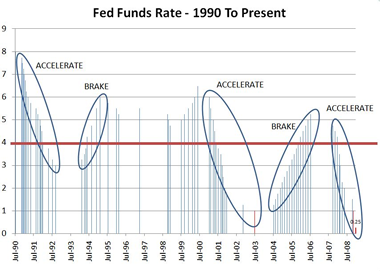
Tracking Interest Rates

Tracking Interest Rates

FEDERAL RESERVE & HOUSING

SEARCH BLOG: FEDERAL RESERVE for full versions... or use the Blog Archive pulldown menu.

February 3, 2006
Go back to 1999-2000 and see what the Fed did. They are following the same pattern for 2005-06. If it ain't broke, the Fed will fix it... and good!
August 29, 2006 The Federal Reserve always acts on old information... and is the only cause of U.S. recessions.
December 5, 2006 Last spring I wrote about what I saw to be a sharp downturn in the economy in the "rustbelt" states, particularly Michigan.
March 28, 2007
The Federal Reserve sees no need to cut interest rates in the light of adverse recent economic data, Ben Bernanke said on Wednesday.
The Fed chairman said ”to date, the incoming data have supported the view that the current stance of policy is likely to foster sustainable economic growth and a gradual ebbing in core inflation”.

July 21, 2007 My guess is that if there is an interest rate change, a cut is more likely than an increase. The key variables to be watching at this point are real estate prices and the inventory of unsold homes.
August 11, 2007 I suspect that within 6 months the Federal Reserve will be forced to lower interest rates before housing becomes a black hole.
September 11, 2007 It only means that the overall process has flaws guaranteeing it will be slow in responding to changes in the economy... and tend to over-react as a result.
September 18, 2007 I think a 4% rate is really what is needed to turn the economy back on the right course. The rate may not get there, but more cuts will be needed with employment rates down and foreclosure rates up.
October 25, 2007 How long will it be before I will be able to write: "The Federal Reserve lowered its lending rate to 4% in response to the collapse of the U.S. housing market and massive numbers of foreclosures that threaten the banking and mortgage sectors."
November 28, 2007 FED VICE CHAIRMAN DONALD KOHN
"Should the elevated turbulence persist, it would increase the possibility of further tightening in financial conditions for households and businesses," he said.

"Uncertainties about the economic outlook are unusually high right now," he said. "These uncertainties require flexible and pragmatic policymaking -- nimble is the adjective I used a few weeks ago."
http://www.reuters.com/

December 11, 2007 Somehow the Fed misses the obvious.
fed_rate_moves_425_small.gif
[Image from: CNNMoney.com]
December 13, 2007 [from The Christian Science Monitor]
"The odds of a recession are now above 50 percent," says Mark Zandi, chief economist at Moody's Economy.com. "We are right on the edge of a recession in part because of the Fed's reluctance to reduce interest rates more aggressively." [see my comments of September 11]
January 7, 2008 The real problem now is that consumers can't rescue the economy and manufacturing, which is already weakening, will continue to weaken. We've gutted the forces that could avoid a downturn. The question is not whether there will be a recession, but can it be dampened sufficiently so that it is very short.
January 11, 2008 This is death by a thousand cuts.
January 13, 2008 [N.Y. Times]
“The question is not whether we will have a recession, but how deep and prolonged it will be,” said David Rosenberg, the chief North American economist at Merrill Lynch. “Even if the Fed’s moves are going to work, it will not show up until the later part of 2008 or 2009.”
January 17, 2008 A few days ago, Anna Schwartz, nonagenarian economist, implicated the Federal Reserve as the cause of the present lending crisis [from the Telegraph - UK]:
The high priestess of US monetarism - a revered figure at the Fed - says the central bank is itself the chief cause of the credit bubble, and now seems stunned as the consequences of its own actions engulf the financial system. "The new group at the Fed is not equal to the problem that faces it," she says, daring to utter a thought that fellow critics mostly utter sotto voce.
January 22, 2008 The cut has become infected and a limb is in danger. Ben Bernanke is panicking and the Fed has its emergency triage team cutting rates... this time by 3/4%. ...

What should the Federal Reserve do now? Step back... and don't be so anxious to raise rates at the first sign of economic improvement.
Individuals and businesses need stability in their financial cost structures so that they can plan effectively and keep their ships afloat. Wildly fluctuating rates... regardless of what the absolute levels are... create problems. Either too much spending or too much fear. It's just not that difficult to comprehend. Why has it been so difficult for the Fed?

About Me

My photo
Michigan, United States
Air Force (SAC) captain 1968-72. Retired after 35 years of business and logistical planning, including running a small business. Two sons with advanced degrees; one with a business and pre-law degree. Beautiful wife who has put up with me for 4 decades. Education: B.A. (Sociology major; minors in philosopy, English literature, and German) M.S. Operations Management (like a mixture of an MBA with logistical planning)